
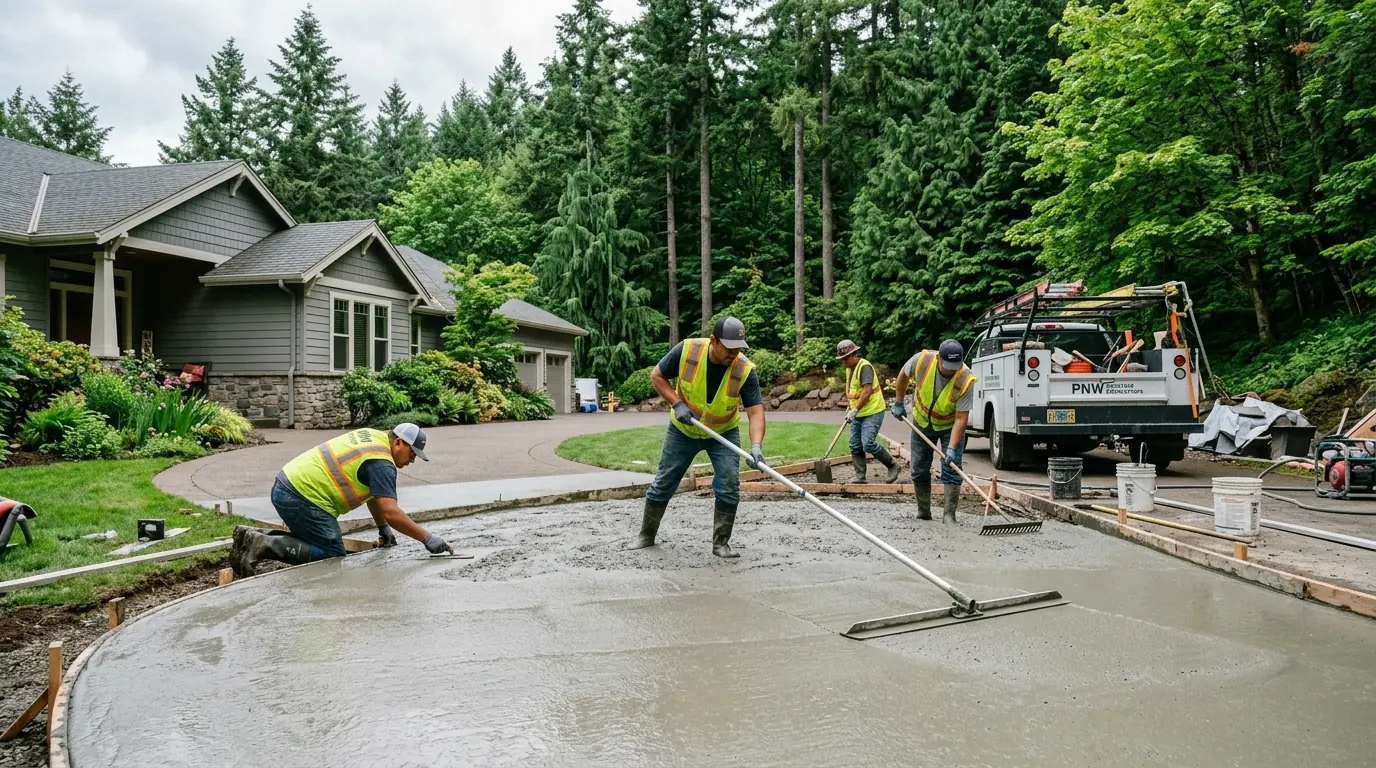
Portland Concrete Company – Professional Concrete Installation & Repair
Driveways, patios, sidewalks, slabs, and concrete repair for Portland homeowners and commercial property owners. We evaluate your site, prepare a clear written estimate, and handle every step from permits to final cleanup.
Local Concrete Contractors Serving Portland Oregon
Portland Concrete Company is a concrete contractor serving Portland, Oregon and the surrounding Multnomah County area. We handle residential and commercial concrete projects across Portland neighborhoods including Northeast Portland, Southeast Portland, North Portland, Southwest Portland, and Northwest Portland, as well as nearby communities like Beaverton, Gresham, and Tigard.
Our work covers concrete driveways, patios, sidewalks, walkways, slabs, steps, porches, decorative concrete, stamped concrete, crack repair, concrete resurfacing, concrete removal and replacement, and commercial flatwork. Every project starts with an on-site evaluation where we inspect the existing conditions, discuss your goals, and prepare a written estimate that covers every line item before any work begins.
Portland's wet climate, clay-heavy soils, established tree roots, and seasonal ground movement all affect how concrete performs over time. We plan every installation with proper drainage slopes, stable base preparation, appropriate concrete thickness, and joint placement designed for the conditions your property actually faces.
Learn More About Us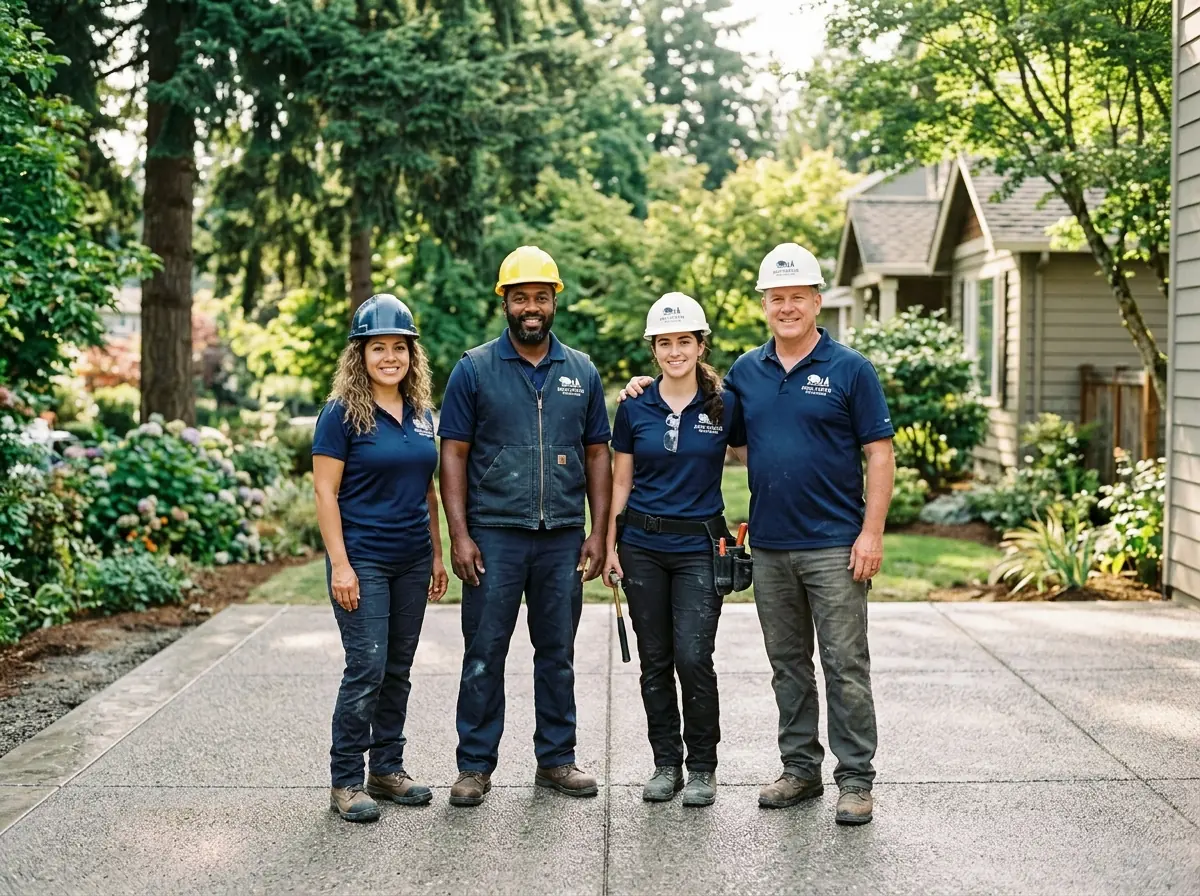
Why Choose Our Portland Concrete Contractors?
Experienced Concrete Professionals
Our crews understand the difference between a slab that lasts and one that fails within a few seasons. From excavation and grading to concrete placement and finishing, every step follows a process built on hands-on field experience across Portland properties.
Local Knowledge of Portland Properties
We know which neighborhoods have clay soils that hold water, where tree roots tend to lift sidewalk panels, and how Portland's extended rainy season affects concrete curing and drainage. That local knowledge shapes every project recommendation.
Site-Specific Concrete Solutions
A narrow lot in Northwest Portland requires a different access plan than a flat suburban driveway in Gresham. We evaluate each site individually and adjust demolition, equipment, base preparation, thickness, and finish based on your property's actual conditions.
Clear Project Scopes & Detailed Estimates
Before any work begins, you receive a written estimate that covers demolition, excavation, base preparation, concrete materials, reinforcement, finishing, permits, and disposal. There are no vague ranges and no surprise charges after the project starts.
Careful Site Preparation
The most important part of any concrete project happens before the pour. We excavate to the correct depth, remove unsuitable material, compact a stable aggregate base, set forms to proper grade and slope, and plan control joints to manage cracking where it matters.
Professional Finishing & Cleanup
Every project includes proper finishing — whether broom, smooth, exposed aggregate, or stamped — followed by curing protection, debris removal, and a final walkthrough with you. We leave your property clean and the concrete properly protected while it reaches full strength.
How Much Does Concrete Work Cost in Portland?
Concrete project costs in Portland depend on several site-specific factors. Two driveways that look similar in size can vary significantly in price based on what the crew finds underneath the existing surface and what the finished project requires.
The main factors that affect concrete pricing include:
- Project size and concrete thickness based on intended use
- Demolition and removal of existing concrete or other materials
- Site access — narrow urban lots in neighborhoods like Sellwood-Moreland or Irvington may require additional planning
- Excavation depth, grading, and compacted aggregate base preparation
- Reinforcement needs such as rebar or welded wire reinforcement
- Concrete mix design and compressive strength requirements
- Finish selection — broom finish, smooth, exposed aggregate, stamped, or decorative
- Drainage requirements including slope adjustments and downspout discharge management
- Permit and inspection fees from Portland Permitting & Development or the applicable jurisdiction
- Disposal of demolished concrete and construction debris
- Weather and scheduling conditions during Portland's rainy season
The most reliable way to understand what your project will cost is through a free on-site evaluation. We visit your property, measure the area, assess the soil and drainage conditions, and provide a detailed written estimate that covers every component of the work.
Residential Concrete Services
Durable, drainage-conscious concrete work for Portland homes.
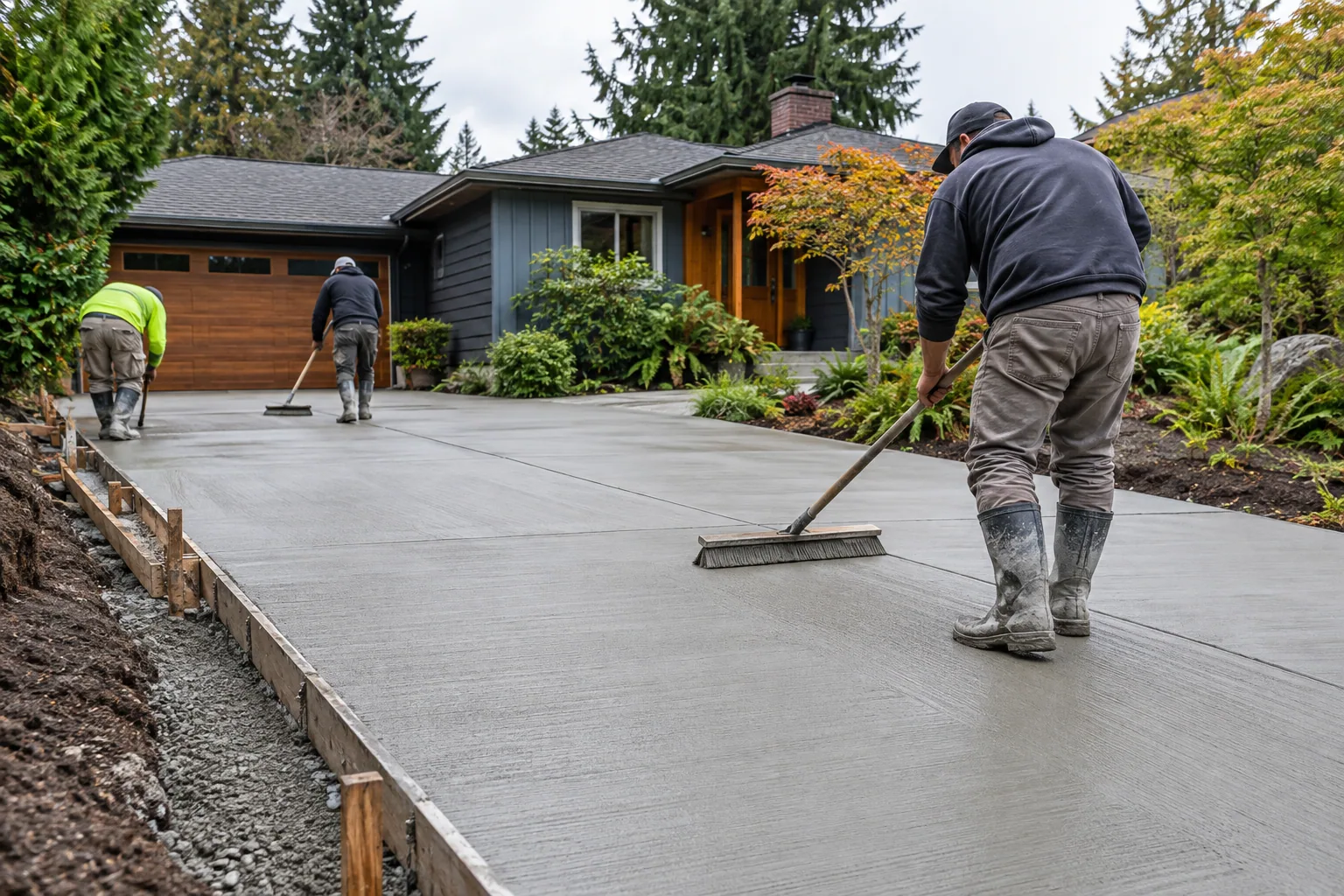
Concrete Driveways
Built with the right base, slope, thickness, and control joints for daily use.
Explore service →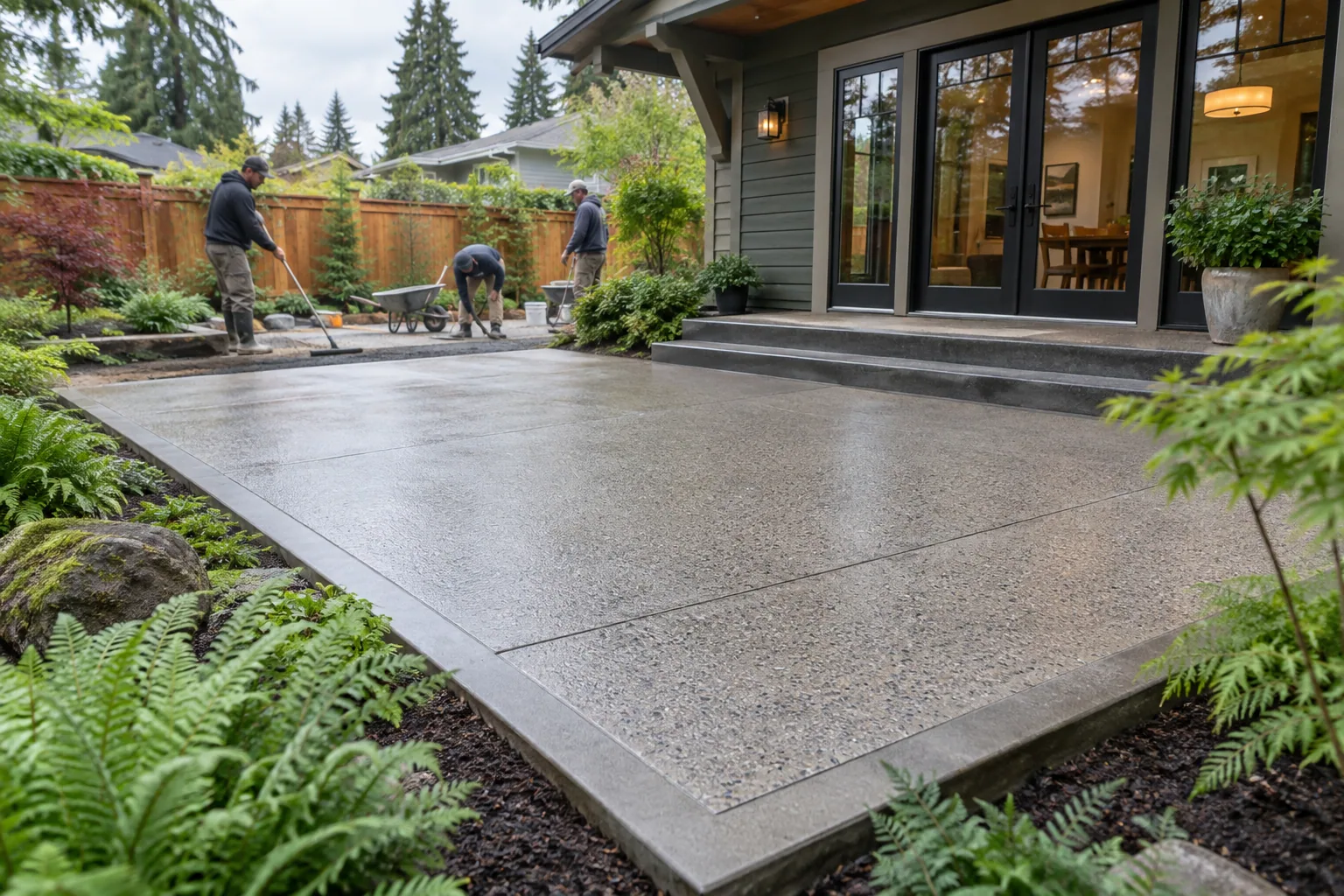
Concrete Patios
Outdoor living surfaces planned for Portland's wet climate and your property.
Explore service →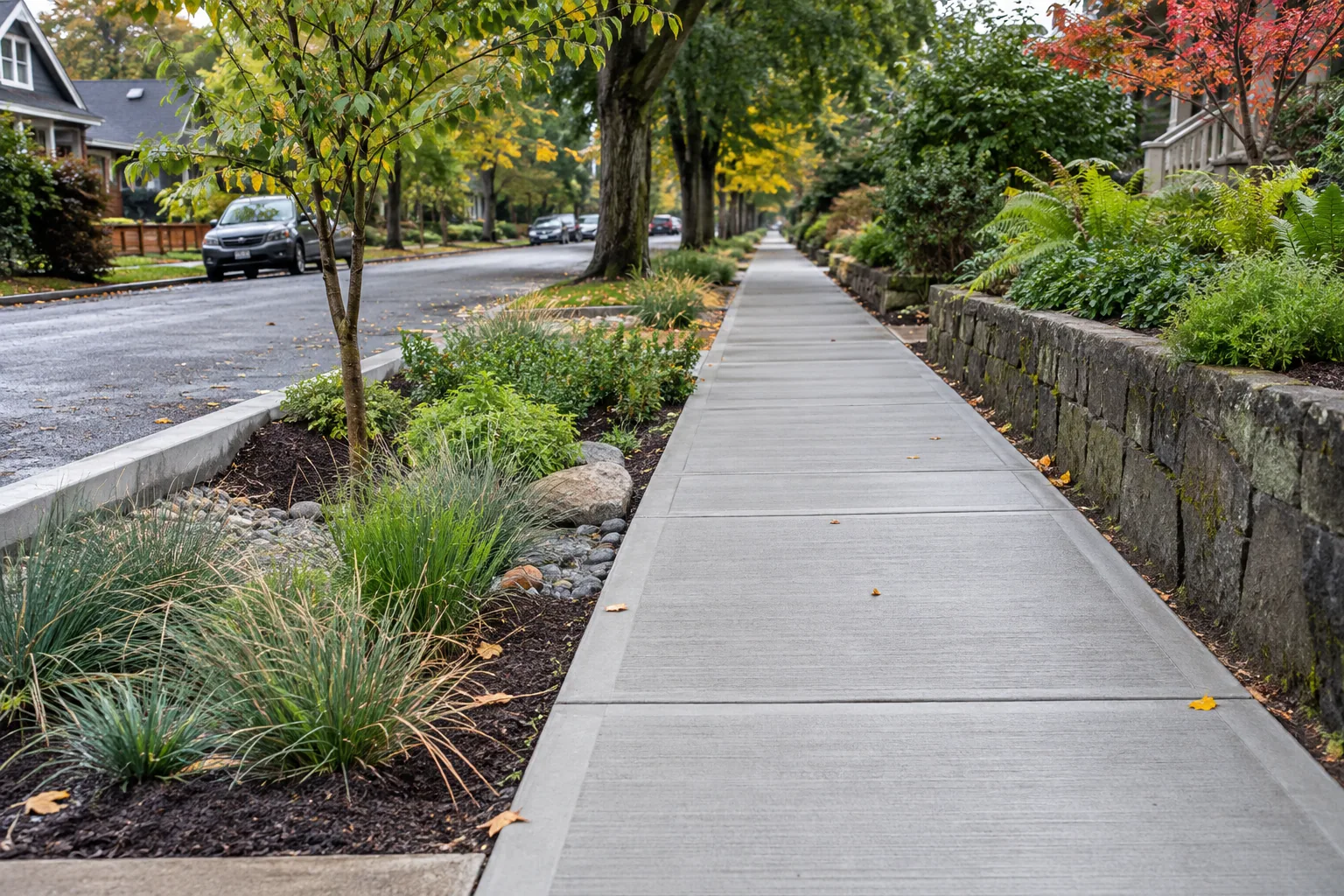
Concrete Sidewalks
Level, slip-resistant walkways and sidewalk replacement with proper drainage.
Explore service →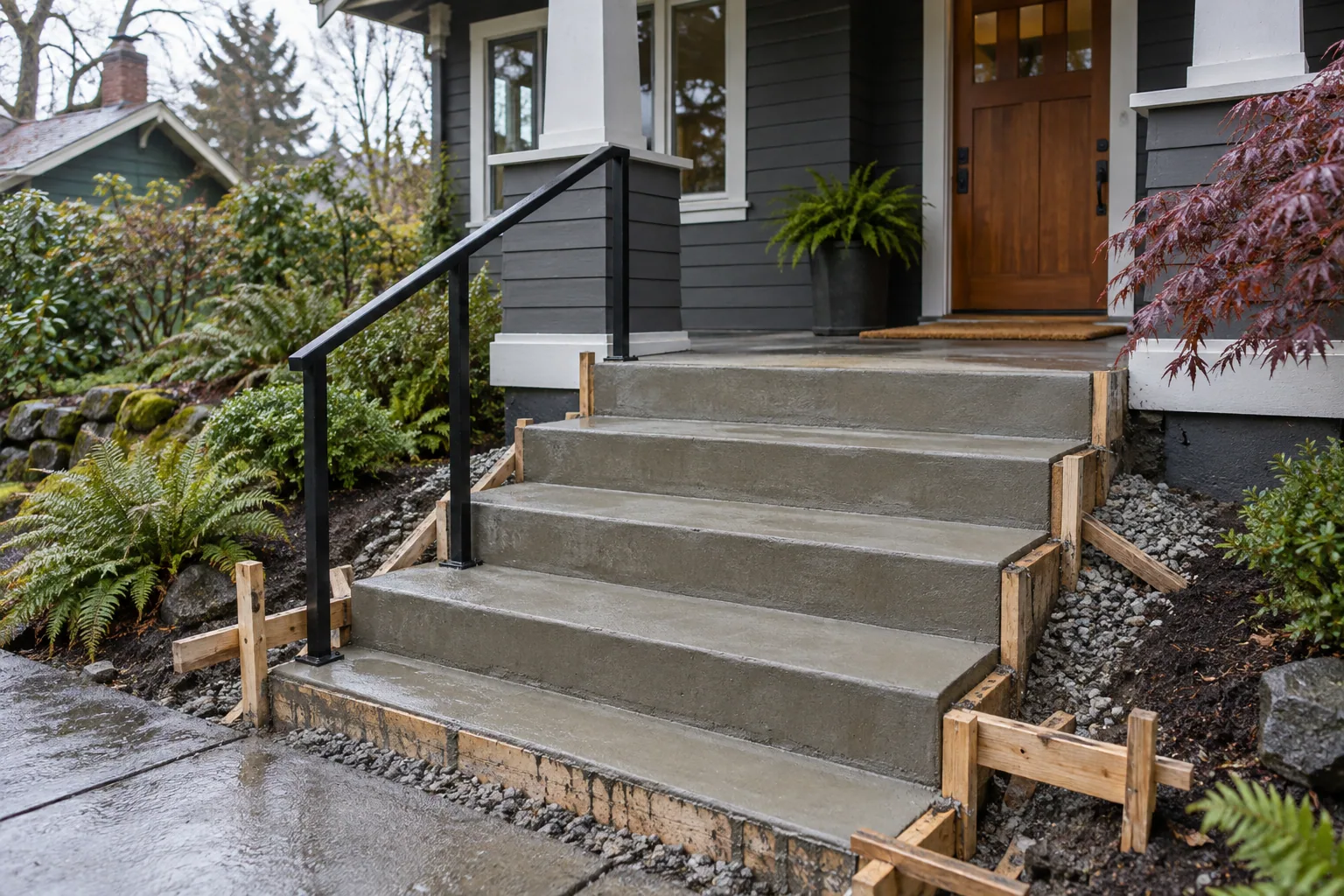
Concrete Steps
Safe, reinforced entry steps made for long-term exterior performance.
Explore service →Outdoor & Decorative Concrete
Functional finishes that improve how your exterior spaces look and work.
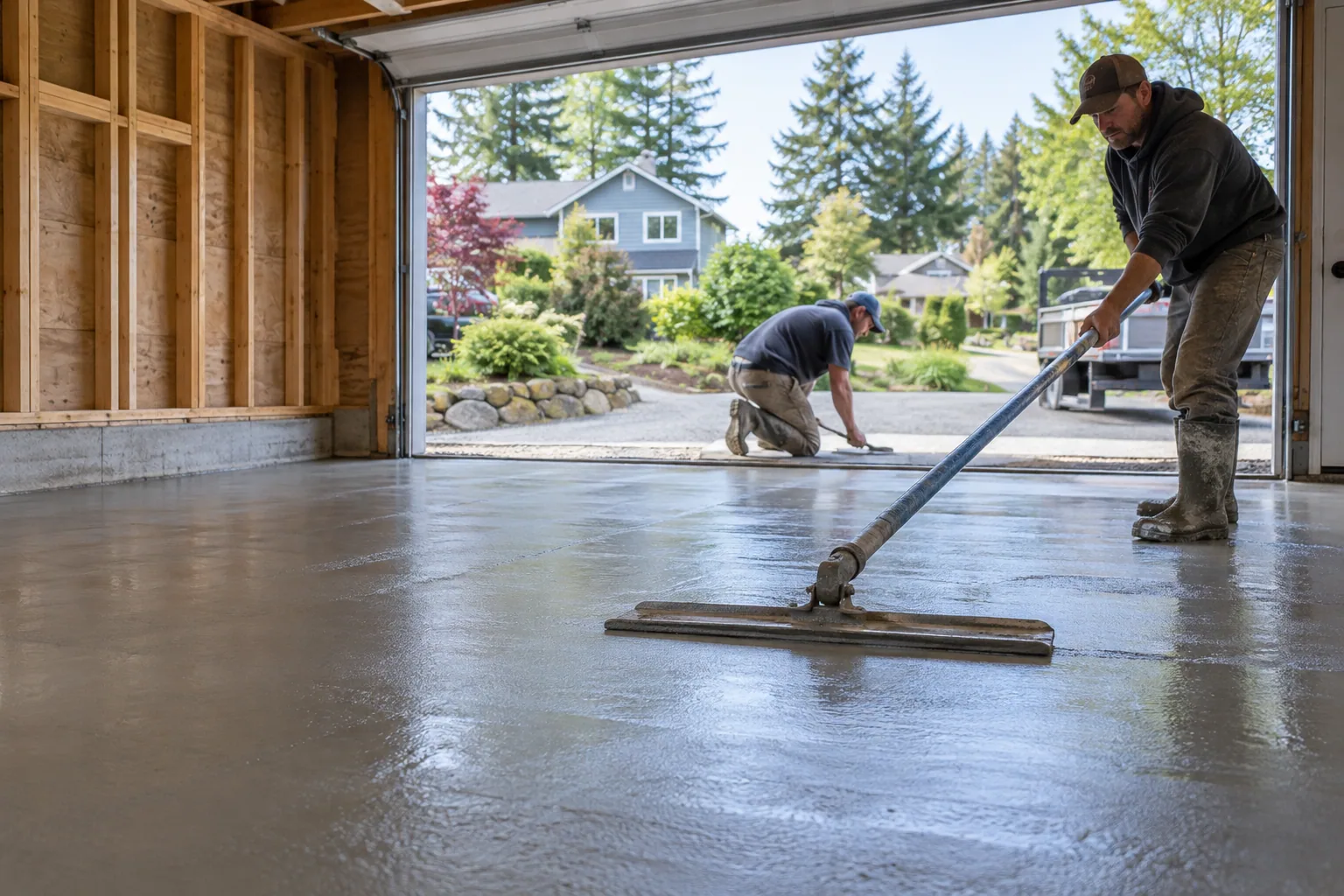
Garage Floor Concrete
Level, durable garage slabs designed for vehicles, storage, and everyday use.
Explore service →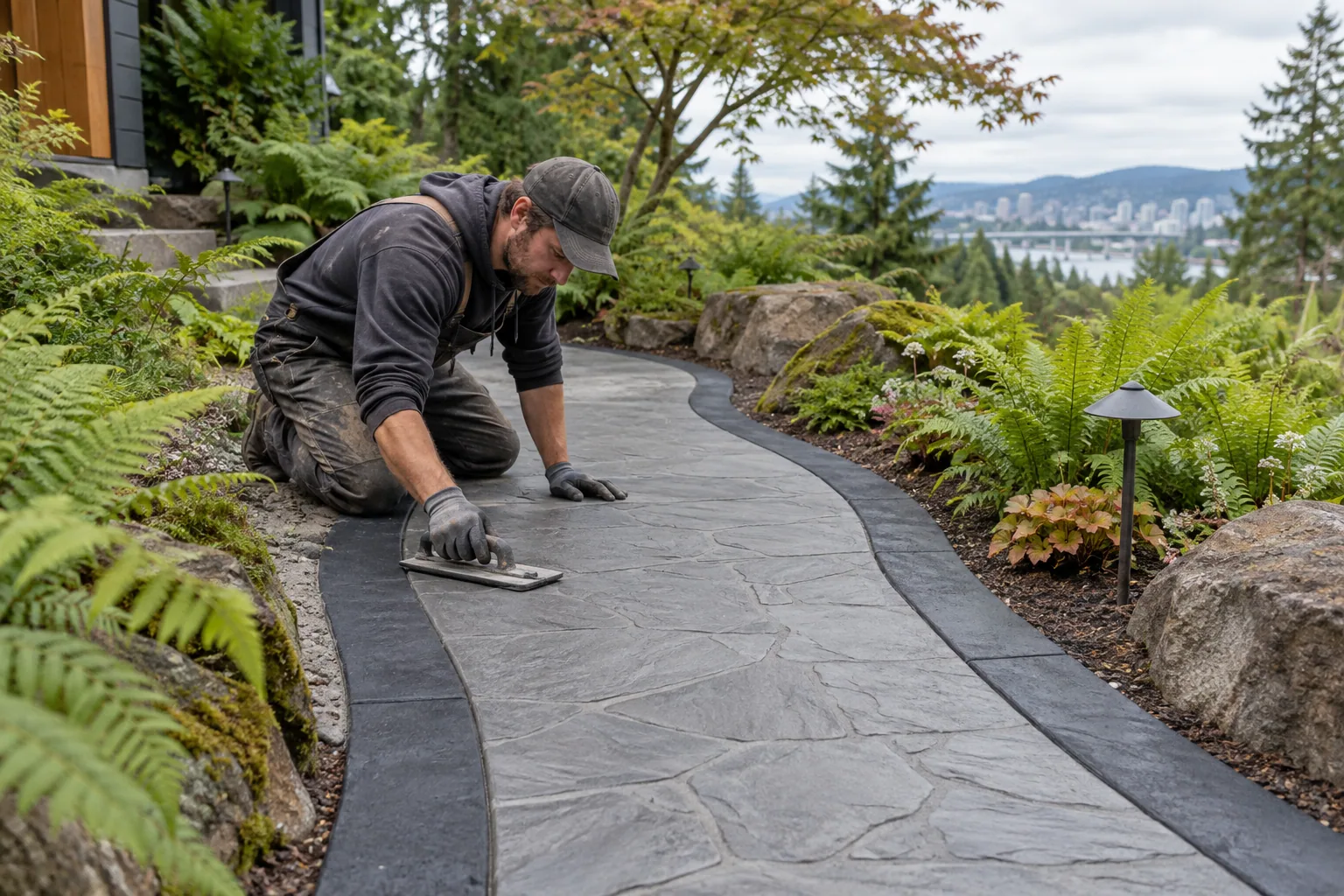
Decorative Concrete
Custom color, texture, and finish options for distinctive concrete surfaces.
Explore service →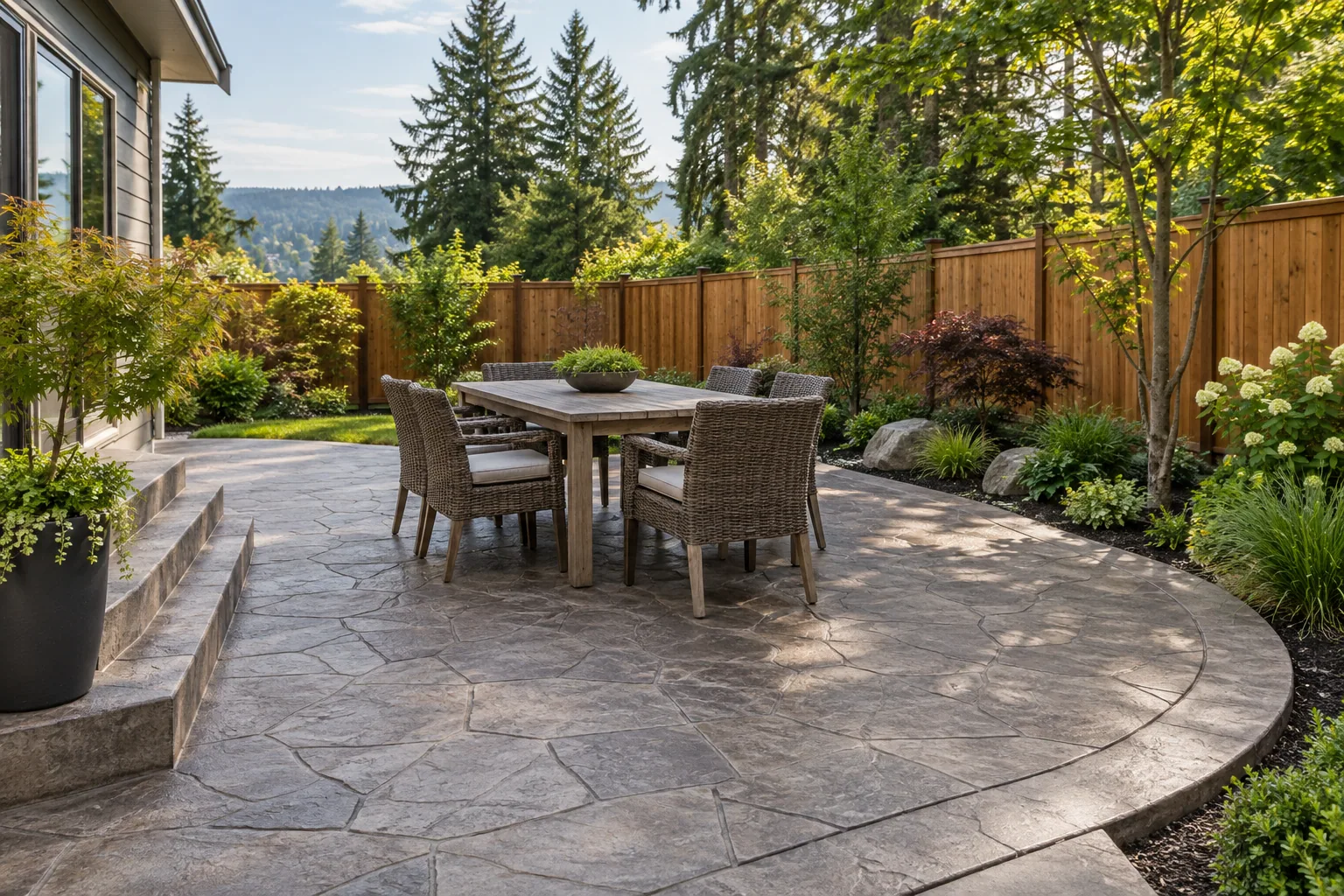
Stamped Concrete
Stone and tile-inspired patterns that bring character to patios and walkways.
Explore service →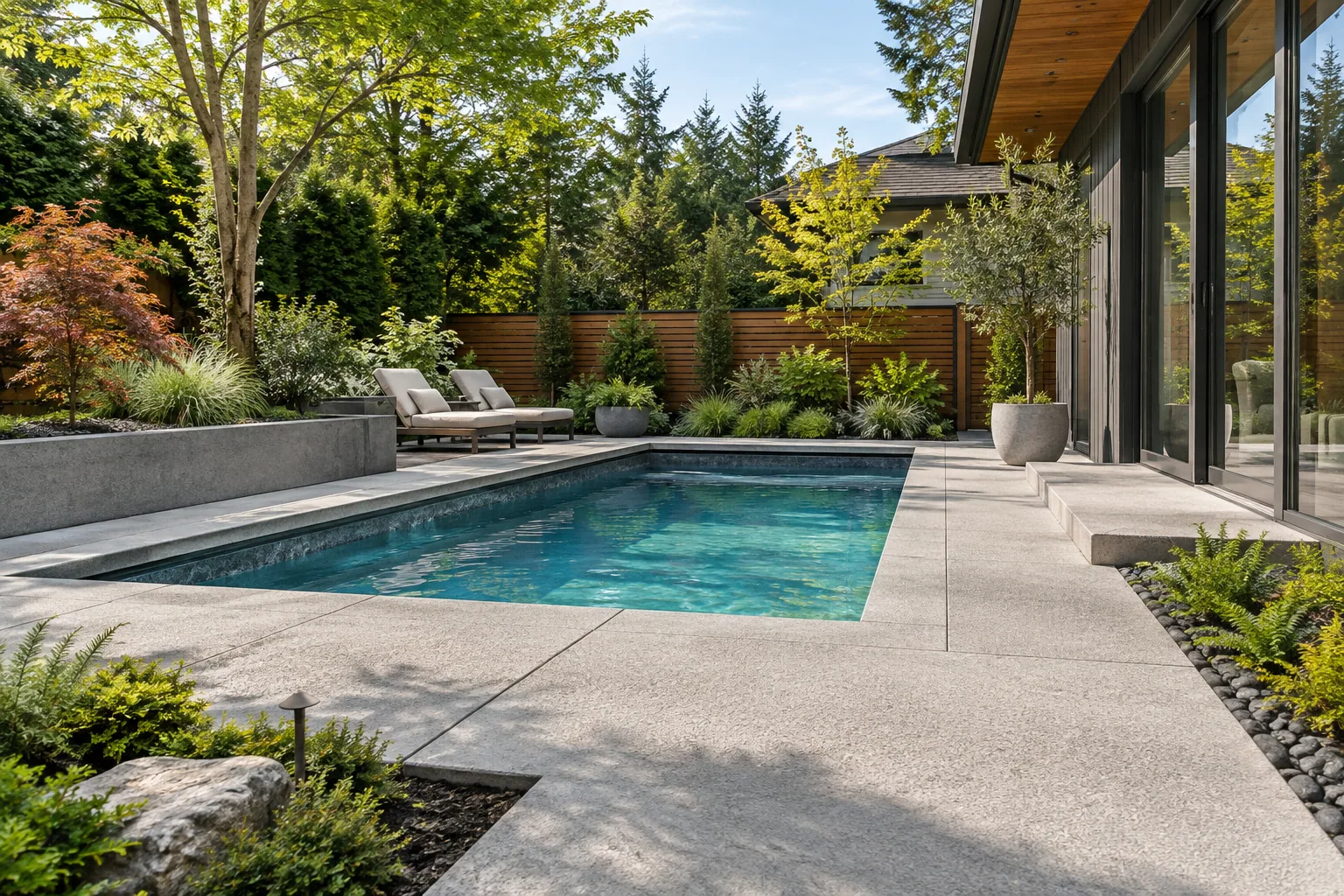
Concrete Pool Decks
Comfortable, slip-resistant pool surrounds with a finish matched to your space.
Explore service →Foundation & Structural Concrete
Stable concrete systems for new construction, additions, and structural repairs.
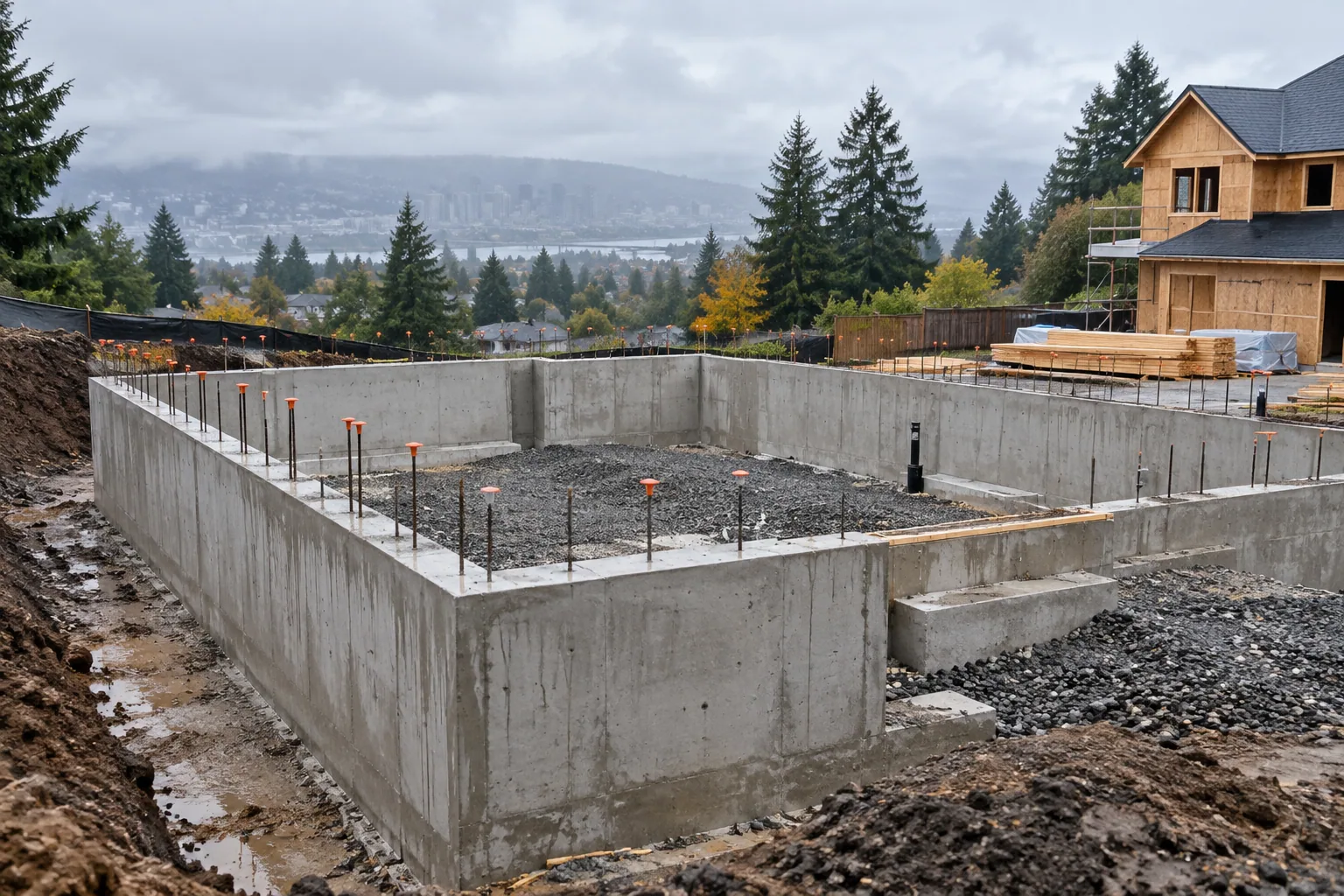
Concrete Foundations
Reliable foundation construction planned around your site and structure.
Explore service →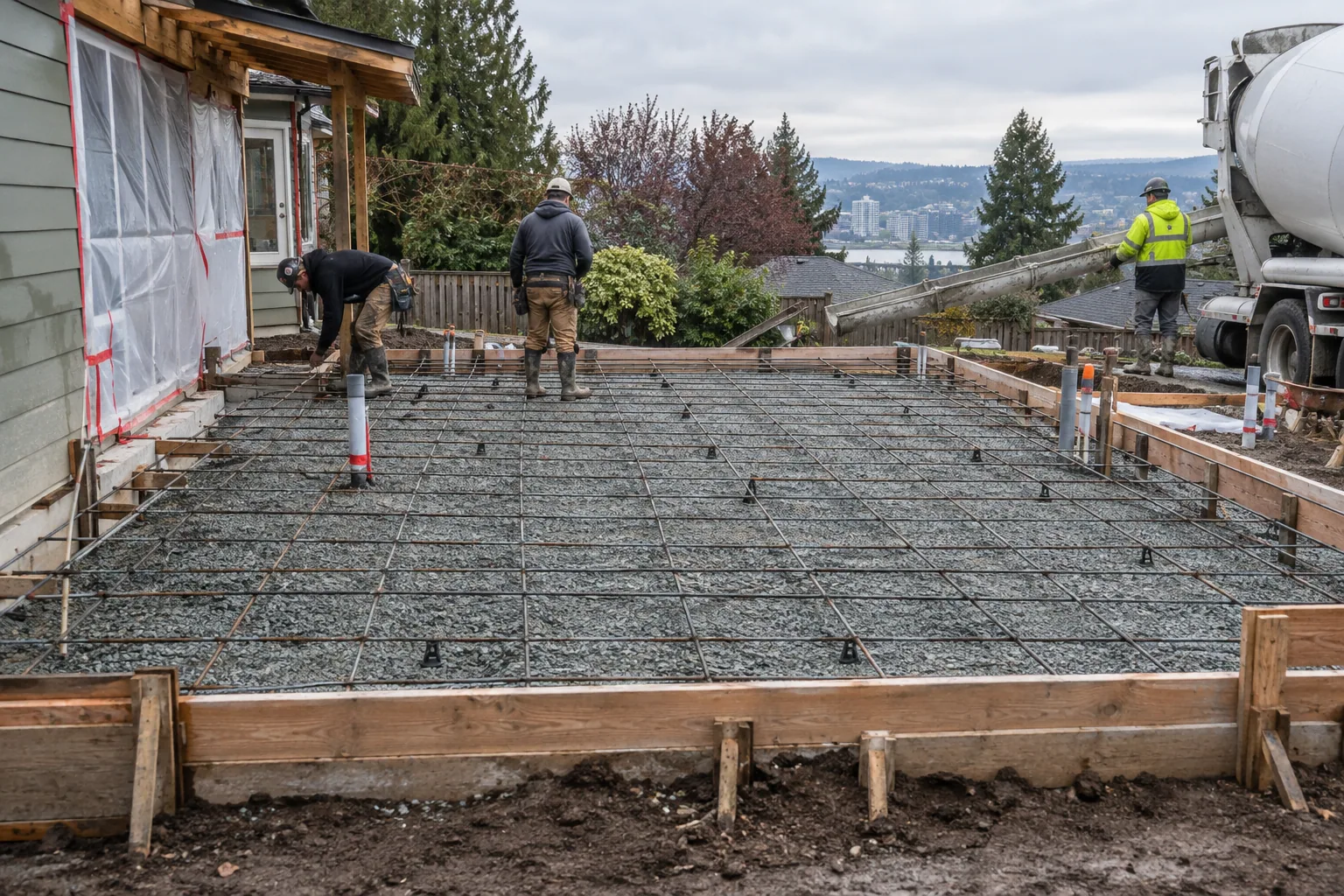
Slab Foundations
Properly prepared slab foundations for buildings, additions, and utility structures.
Explore service →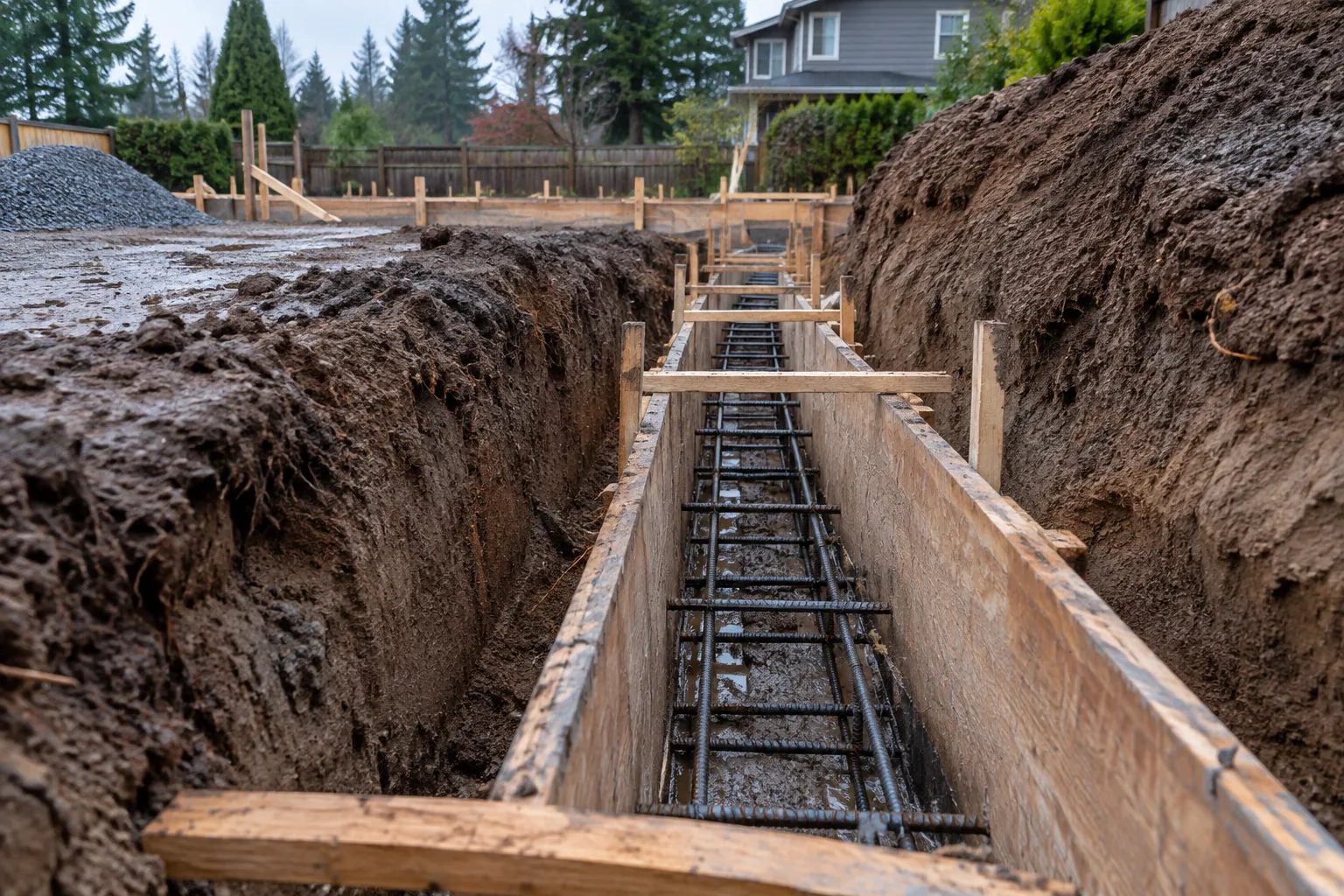
Concrete Footings
Load-bearing support designed for stable, code-conscious construction.
Explore service →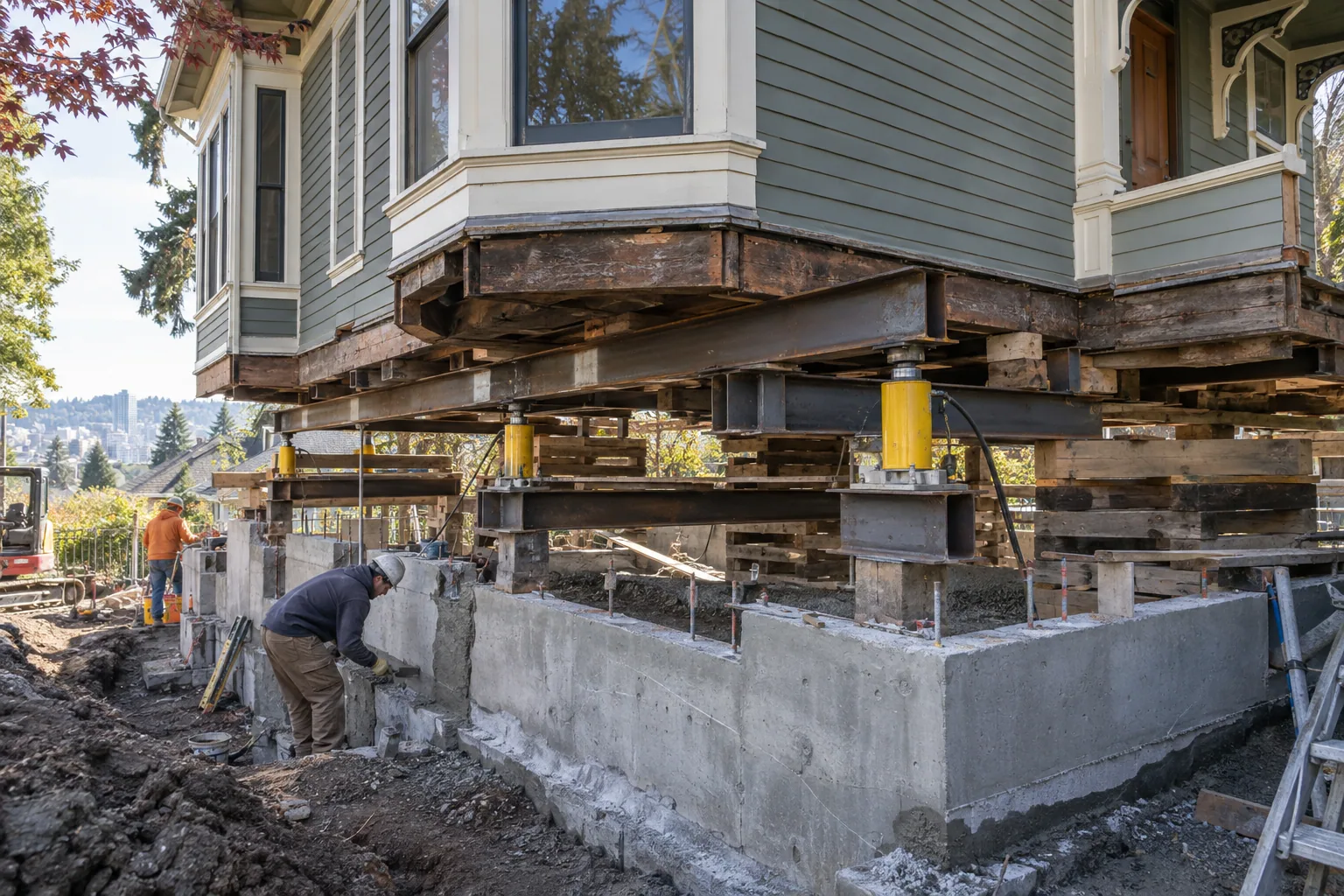
Foundation Raising
Targeted lifting and correction for settled or uneven foundation systems.
Explore service →Commercial & Specialty Concrete
Specialized concrete services for Portland properties, access needs, and heavy-use areas.
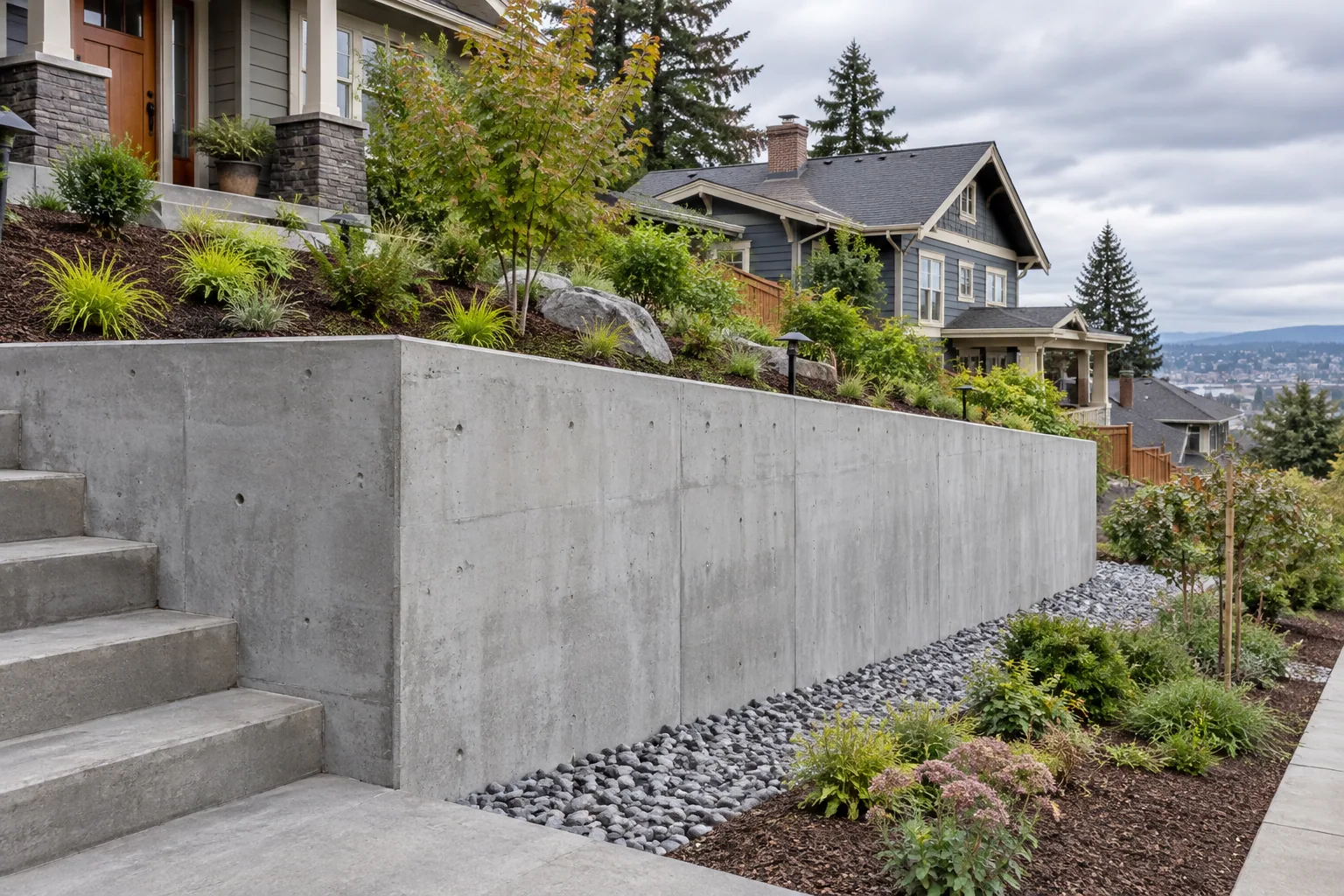
Retaining Walls
Strong concrete walls that manage grade changes and support landscaped areas.
Explore service →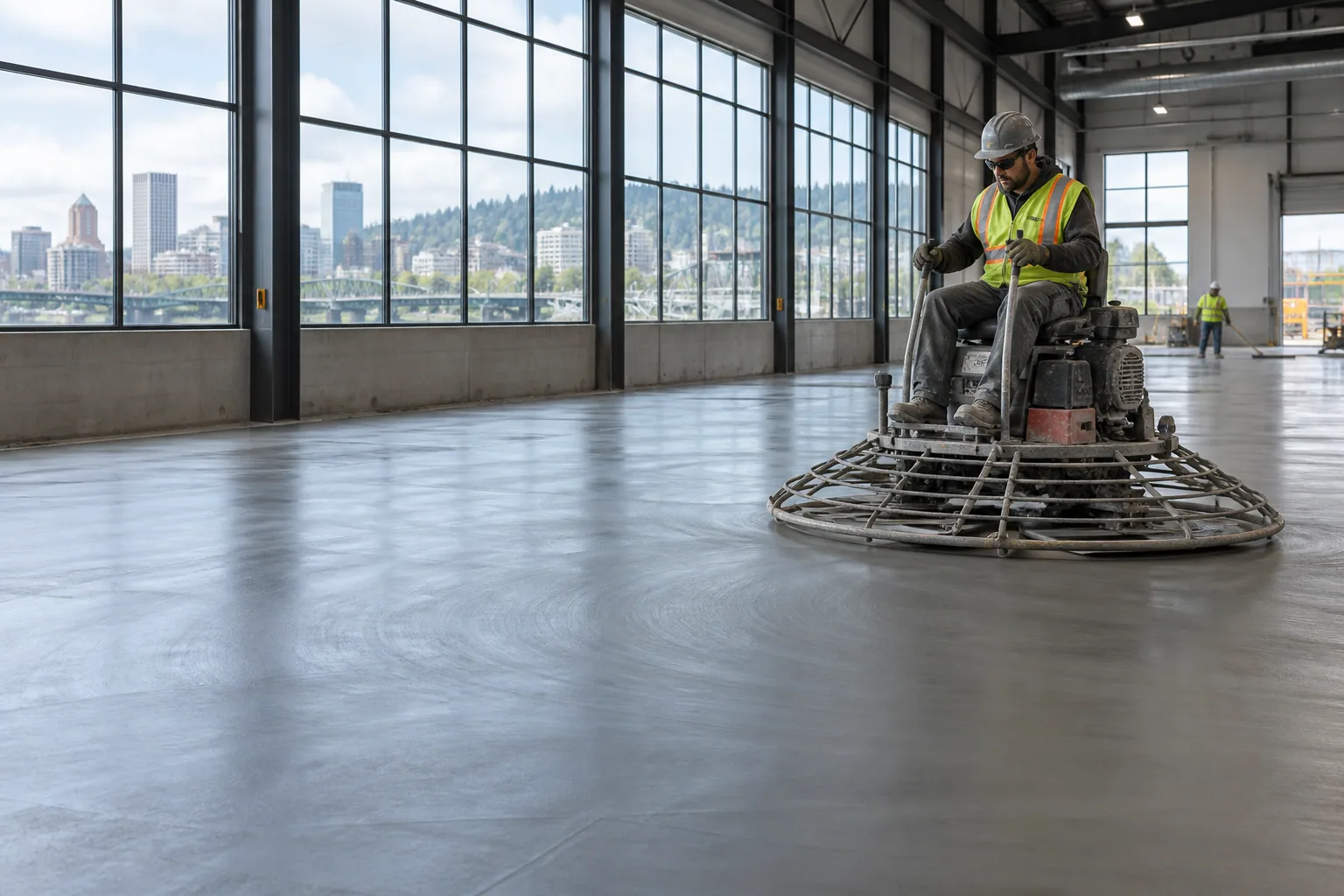
Concrete Floor Installation
Durable concrete floors for garages, shops, warehouses, and work areas.
Explore service →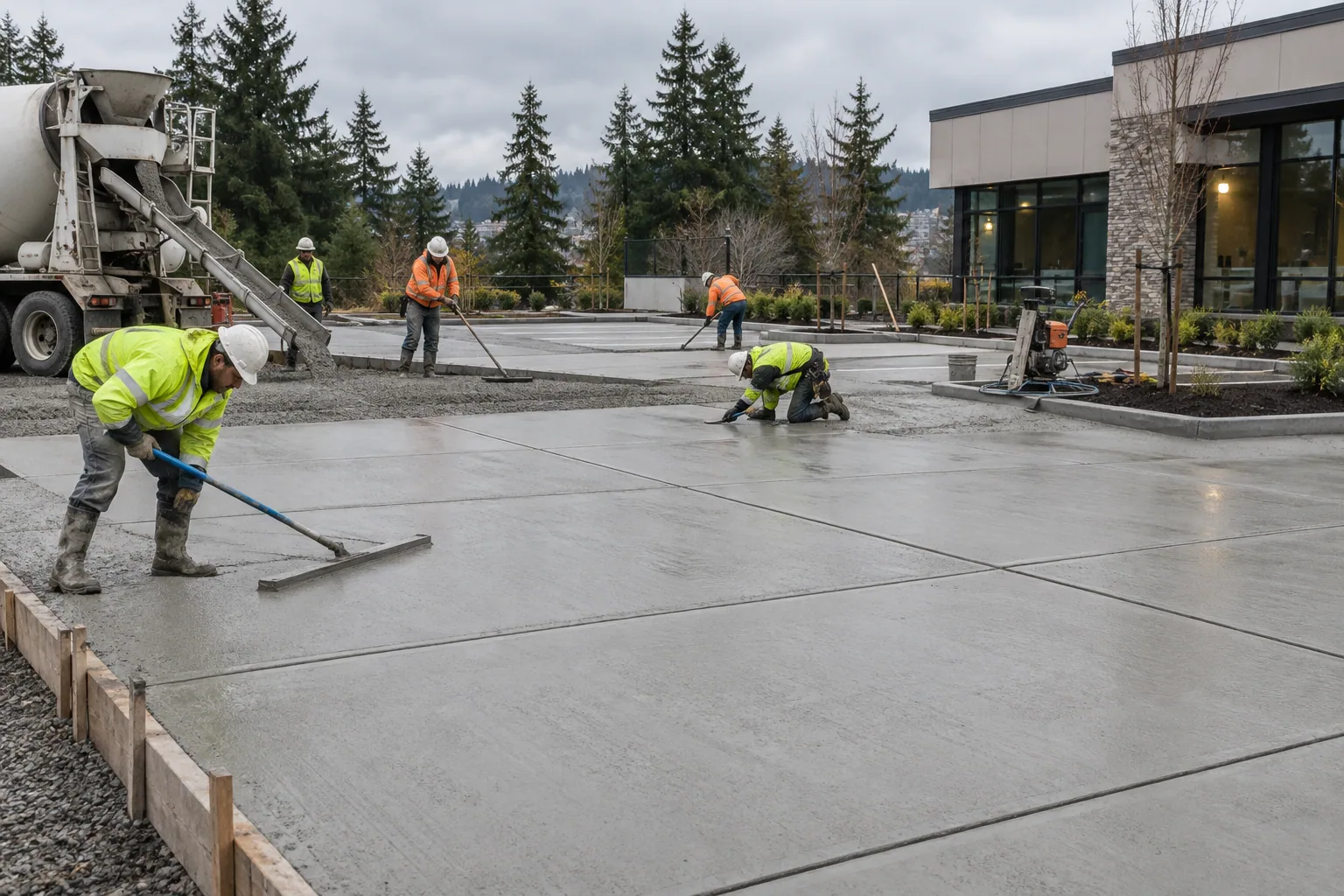
Concrete Parking Lots
Traffic-ready parking surfaces with planned drainage and joint layouts.
Explore service →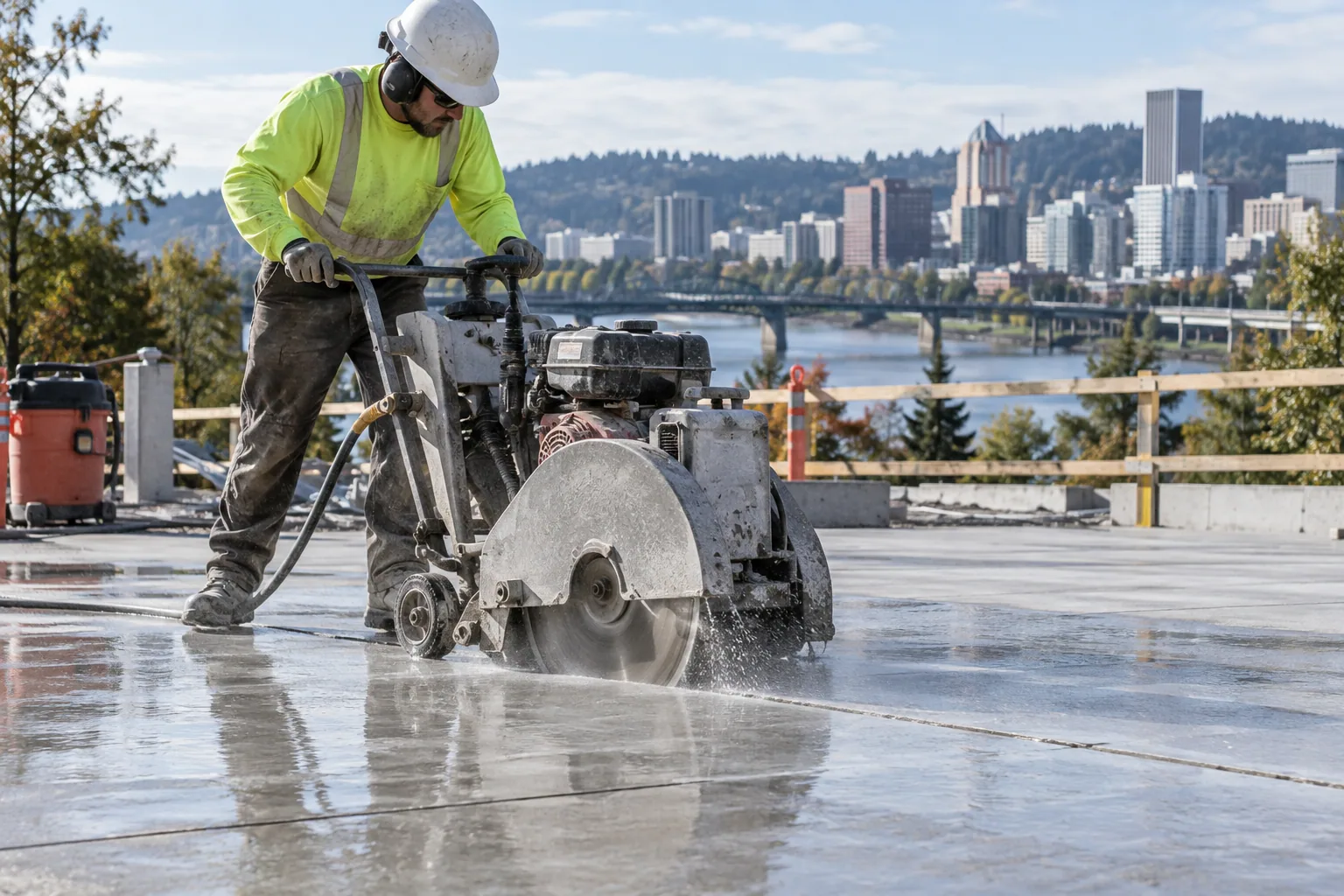
Concrete Cutting
Precise slab, wall, and core cutting for repairs, access, and construction work.
Explore service →Types of Concrete Finishes We Offer
Traditional Broom-Finish Concrete
The most common exterior finish. A broom texture provides reliable slip resistance on driveways, sidewalks, and patios, which is particularly practical in Portland's frequently wet conditions.
Smooth-Finish Concrete
A troweled smooth finish works well for interior slabs, garage floors, and covered areas where slip resistance from rain is not a primary concern. The surface is easier to clean and provides a polished appearance.
Exposed-Aggregate Concrete
Exposed aggregate reveals the natural stone within the concrete mix, creating a textured and visually interesting surface. It offers good traction and is a popular choice for Portland patios and walkways.
Stamped Concrete
Stamped concrete replicates the look of natural stone, brick, or tile. Patterns and colors are applied during placement. Stamped surfaces in Portland's wet climate benefit from periodic sealing to maintain appearance and protect the color.
Colored & Decorative Concrete
Integral color, stains, and decorative treatments allow you to match your concrete to your home's exterior or landscape design. Exact color matching to existing concrete may not always be achievable due to differences in age, mix, and weathering.
Sealed Exterior Concrete Where Appropriate
Concrete sealers can help protect exterior surfaces from moisture absorption, staining, and moss growth. Whether sealing is appropriate depends on the finish type, exposure, and the specific product's compatibility with Portland's climate conditions.
Our Concrete Installation Process
The specific process depends on project type and site conditions, but most projects follow these steps.
Get in Touch
Call or submit a contact form with basic project details — the type of work, approximate size, and your address. We respond within one business day to schedule a free on-site visit. You do not need to have everything figured out before reaching out.
On-Site Evaluation
We visit your property to measure the project area, inspect the existing concrete, assess soil conditions, review drainage, check site access, and identify any factors that will affect the scope and cost of the work.
Project Recommendation & Written Estimate
You receive a clear written estimate covering demolition, excavation, base preparation, concrete materials, reinforcement, finish, permits, and disposal. We explain the recommendation so you understand what is included and why.
Site Preparation & Formwork
The crew removes existing concrete where needed, excavates to the required depth, compacts the aggregate base, sets forms to the correct grade and slope, and places reinforcement. This is the step that determines how long the finished surface will last.
Concrete Placement & Finishing
Concrete is placed, screeded, floated, edged, and finished to the selected texture. Control joints are cut at the planned spacing. For stamped or decorative work, patterns and color are applied during placement while the concrete is still workable.
Curing, Cleanup & Final Review
Fresh concrete is protected during the initial curing period, which is especially important during Portland's unpredictable weather. We remove forms, clean all debris and construction materials, and walk you through the finished work. For permitted projects, the required inspection is coordinated before we consider the job complete.
Have a Look at Our Recent Concrete Work
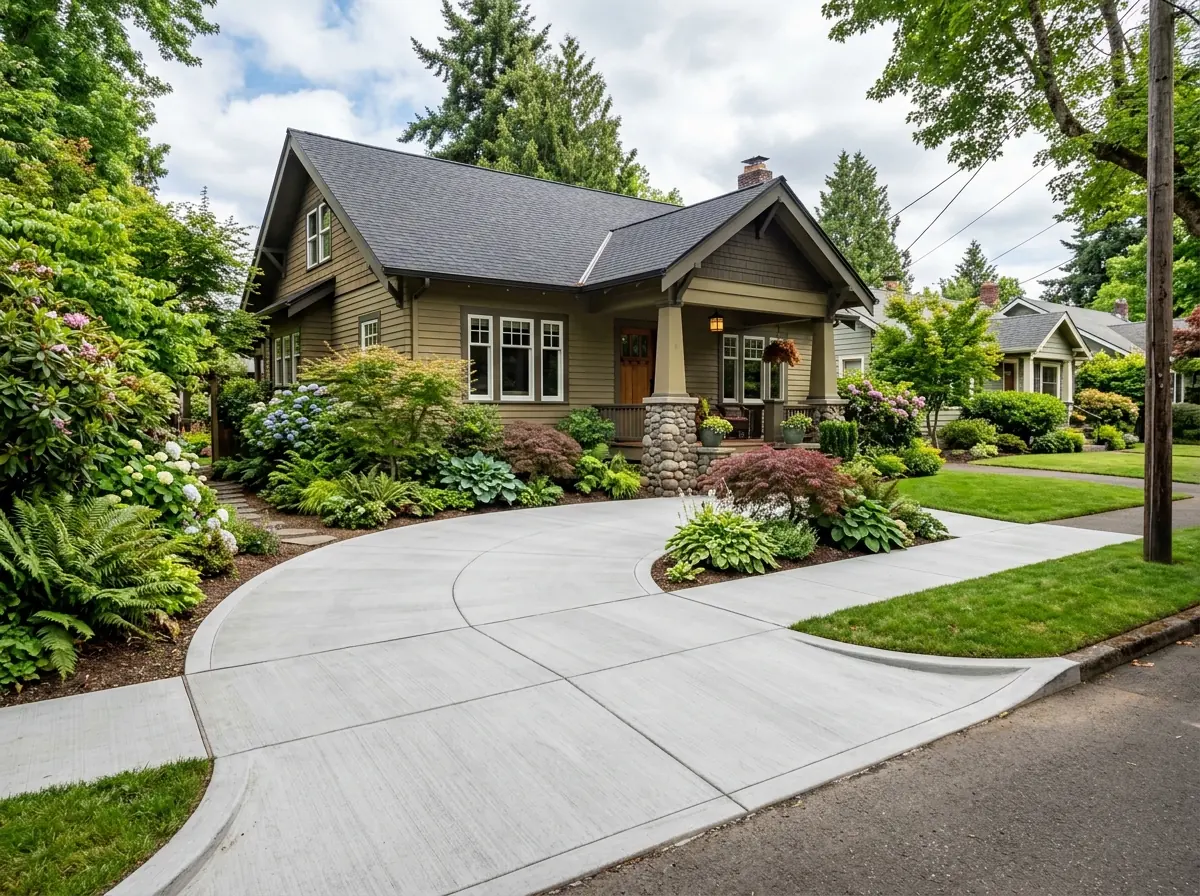
Concrete Driveway Installation
A typical Portland driveway project involves removing the failed surface, excavating and compacting the subgrade, placing a compacted aggregate base, setting forms to the correct slope for drainage, and pouring concrete at the thickness appropriate for daily vehicle use. Control joints are planned to manage cracking, and a broom finish provides traction in wet weather.
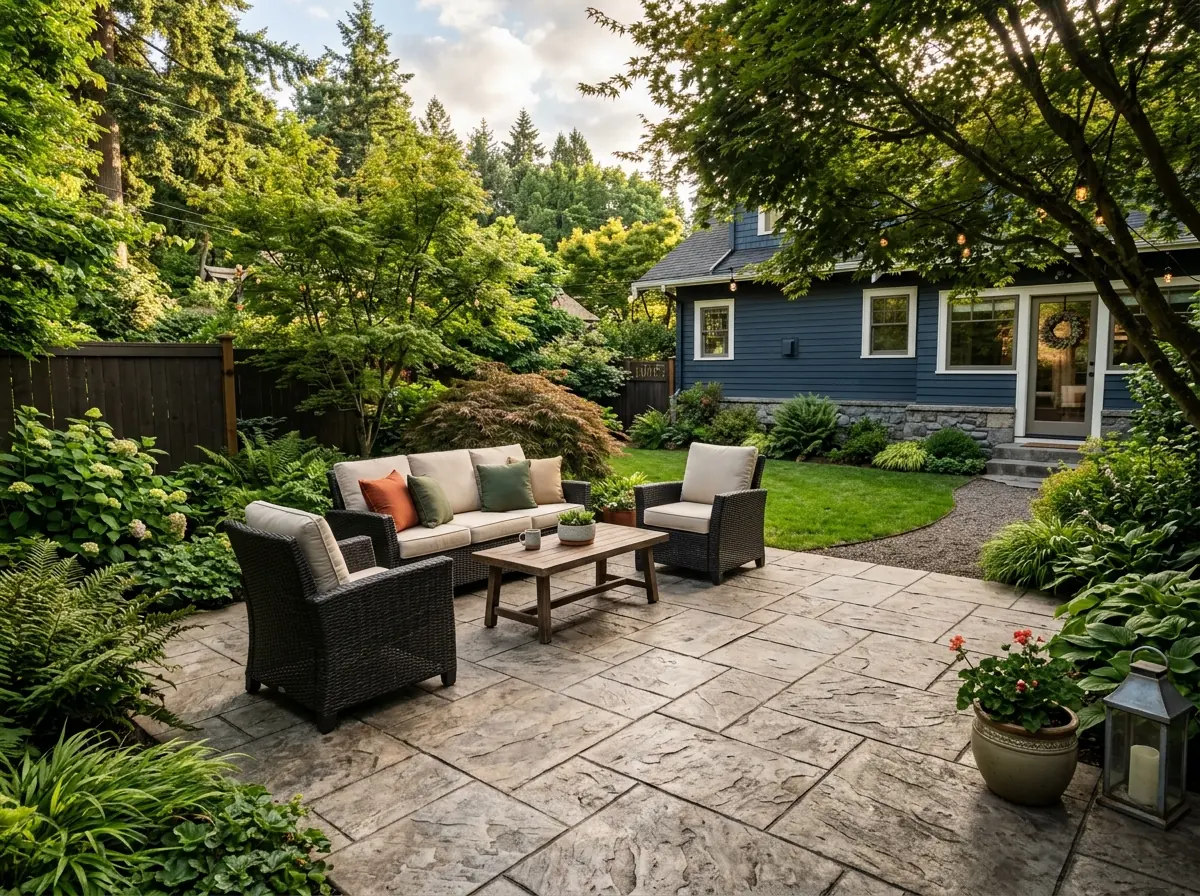
Concrete Patio or Walkway Project
Patio projects in Portland neighborhoods often involve drainage-conscious grading, careful base preparation over the area's clay-heavy soils, and a finish selected for outdoor use. A stamped or exposed-aggregate surface adds visual interest while maintaining the traction needed for a frequently wet exterior surface. Proper slope directs water away from the home's foundation.
What Causes Concrete Damage in Portland?
Portland's climate and soil conditions create a unique set of challenges for exterior concrete. Understanding what causes damage helps property owners make informed decisions about repair versus replacement.
Common causes of concrete deterioration in the Portland area include inadequate base preparation during the original installation, soil settlement over time, poor drainage and standing water, tree-root pressure pushing against slab edges and underneath surfaces, erosion near slab edges from repeated rainfall, improper concrete thickness for the actual load, inadequate joint placement allowing uncontrolled cracking, moisture entering existing cracks and joints, occasional freeze-thaw exposure during Portland's cold snaps, surface wear and scaling from years of use, previous low-quality repairs failing under continued stress, downspouts discharging water directly onto or next to concrete surfaces, and moss and algae growth retaining moisture against the concrete surface.
An on-site evaluation helps determine which of these factors are affecting your concrete and what the appropriate next step should be.
Common Signs Your Portland Concrete Needs Attention
These conditions may indicate that your concrete needs evaluation. An on-site inspection is needed to understand the likely cause and suitable solution.
Cracks That Continue to Widen
Cracks that grow over time may indicate ongoing settlement, drainage issues, or base failure rather than normal shrinkage.
Uneven or Sunken Concrete
Settlement creates trip hazards and allows water to pool. The cause may involve soil movement, erosion, or original base preparation.
Standing Water or Poor Drainage
Water that pools on or beside concrete often points to slope issues, settled areas, or blocked drainage paths.
Spalling, Pitting or Flaking Surfaces
Surface deterioration can result from moisture exposure, deicing chemicals, or issues with the original mix and finishing.
Raised Sidewalk Panels & Trip Hazards
Tree roots growing beneath sidewalk panels can lift and displace concrete sections, creating safety concerns.
Crumbling Concrete Edges
Edge deterioration often happens where concrete meets soil, especially when erosion or poor drainage undermines the slab edge.
Failed Previous Patches
Patches that crack, lift, or separate from the original concrete may indicate that the underlying issue was not addressed before the repair was made.
Moss, Algae or Slippery Exterior Surfaces
Persistent moss and algae growth on Portland exterior concrete creates slippery conditions and retains moisture that can accelerate surface wear.
Concrete Repair or Full Replacement?
Deciding between repair and replacement depends on the condition of the existing slab, what is happening underneath it, and what you need the surface to do going forward.
When the concrete is structurally sound and the base is stable, options like crack sealing, joint repair, localized patching, or surface resurfacing may be practical. These approaches can extend the useful life of an existing surface without the cost and disruption of full replacement.
However, when you are dealing with widespread settlement, severe slab displacement, an unstable subgrade, recurring drainage problems, extensive spalling, major trip hazards, or repeated patch failure, full removal and replacement is typically the more responsible choice. Resurfacing over an unstable slab does not correct the underlying problem and is likely to fail again.
During an on-site evaluation, we assess the slab stability, settlement, drainage, surface condition, base condition, and intended use to determine which option makes sense for your situation. Practical concrete repair-versus-replacement guidance is one of the most important things a concrete contractor can provide.
Concrete Built for Portland's Wet Climate
Portland averages over 150 days of measurable rain per year. That level of moisture exposure affects every part of a concrete project — from drainage planning and base preparation to finishing and curing.
We design every exterior installation with drainage-aware planning that includes appropriate slope away from structures, stable base preparation to prevent water from undermining the slab, and joint placement that accounts for moisture and temperature changes. Slip-resistant exterior finishes are standard practice for surfaces that stay wet through much of the year.
Portland's occasional freezing temperatures also require attention. Water that enters cracks and joints can freeze, expand, and cause spalling or further displacement. Properly placed control joints, sealed where appropriate, help manage this exposure. Concrete sealers may be recommended for stamped or decorative surfaces to protect color and reduce moisture absorption.
Wet-weather scheduling and concrete curing considerations are part of every project plan. We monitor forecasts carefully and protect freshly placed concrete from rain, rapid moisture loss, and temperature extremes during the critical initial curing period.
Concrete Equipment & Tools We Use
Professional concrete work requires the right equipment for each phase of the project. Our crews use excavation equipment for site preparation and demolition, concrete saws for precise cutting and controlled removal, compaction equipment for building a stable aggregate base, laser levels for accurate grading and slope verification, concrete forms for shaping the finished dimensions, screeds for leveling freshly placed concrete, bull floats and hand floats for initial surface finishing, steel and magnesium trowels for final finishing, edging tools and jointing tools for clean edges and control joints, concrete vibrators where needed to eliminate air pockets, finishing tools for broom, smooth, and decorative textures, protective coverings for curing and weather protection, pressure washing and surface-preparation equipment where applicable, and debris-control and cleanup equipment.
Concrete Rules, Permits & Site Conditions in Portland
City of Portland Permitting Requirements
Permit requirements in Portland depend on the project type, property location, zoning, scope of work, and whether the construction affects a public right-of-way. Not every concrete project requires a building permit, but many do — especially those involving structural elements, changes to drainage, or work within the public right-of-way. We verify current requirements with Portland Permitting & Development before work begins.
Sidewalk, Curb & Driveway Permits
Driveway installations or changes, and work involving sidewalks, curbs, driveway approaches, or the public right-of-way typically require approval, permits, and inspections through Portland Permitting & Development and the Portland Bureau of Transportation. Private-property work and public-right-of-way work follow different requirements, and we handle the coordination for each.
Concrete Patios, Slabs & Other Private-Property Work
An on-grade patio or slab on private property may still be subject to zoning, drainage, lot-coverage, environmental, or historic-resource requirements even when a building permit is not specifically required. Before making any permit determination, we verify the property address, zoning designation, applicable overlay zones, and current rules.
Current Concrete & Construction Standards
All work follows the building codes, zoning standards, transportation specifications, right-of-way rules, and local amendments currently in effect at the time of construction. Standards change periodically, and we stay current with the applicable requirements in Portland and surrounding jurisdictions.
Concrete Service Areas Near Portland
We serve Portland and the surrounding communities listed below. Each area has its own property types, terrain, soil conditions, and permitting requirements.
Portland Concrete Project Guides & Resources
Portland Concrete Cost Guide
An overview of the factors that affect concrete project pricing in the Portland area, including project size, demolition, site access, base preparation, concrete thickness, finish selection, and permit fees.
Concrete Repair vs. Replacement Guide
How to evaluate whether damaged concrete can be repaired, resurfaced, or should be fully replaced based on slab condition, base stability, drainage, and intended use.
Portland Driveway & Sidewalk Permit Guide
An explanation of when permits and inspections are required for driveway, sidewalk, and public-right-of-way concrete work in Portland, and how the process works.
Concrete Maintenance for Portland's Wet Climate
Practical maintenance considerations for exterior concrete in the Pacific Northwest, including drainage, moss prevention, sealing where appropriate, and evaluating surfaces after winter.
Concrete Questions From Portland Property Owners
Costs depend on project size, concrete thickness, demolition needs, site access, base preparation, reinforcement, finish type, permits, and disposal. The most accurate way to understand pricing is through a free on-site estimate specific to your property and project.
In most cases, yes. Driveway work in Portland — especially when it involves the driveway approach or public right-of-way — typically requires a permit from Portland Permitting & Development and possibly the Portland Bureau of Transportation. The specific requirements depend on your property, zoning, and scope of work.
Sidewalk repair and replacement in Portland generally requires a permit because sidewalks are within the public right-of-way. The process may also involve coordination with Urban Forestry if tree roots contributed to the damage.
Sometimes, yes. If the underlying slab is stable and the cracks are not caused by continuing settlement, crack sealing, joint repair, or resurfacing may be practical. When settlement, base failure, or displacement is ongoing, replacement is usually the more reliable long-term solution.
Concrete cracking can be caused by multiple factors, including shrinkage during curing, insufficient joint placement, inadequate base preparation, soil settlement, tree-root pressure, heavy loads, drainage problems, moisture entering existing cracks, and occasional freeze-thaw exposure. An on-site evaluation helps identify the likely cause.
Portland's extended wet season means exterior concrete is exposed to moisture for much of the year. This can accelerate surface wear, encourage moss and algae growth, saturate the soil beneath slabs, and allow water to enter cracks and joints. Proper drainage planning, base preparation, and joint placement are essential to managing these effects.
A broom finish is the most common choice for exterior walkways because it provides consistent slip resistance when wet. Exposed aggregate is another good option that adds visual texture while maintaining traction.
Most residential driveways are poured at four to five inches for standard passenger vehicles. Driveways that regularly support heavier vehicles may need six inches or more. The appropriate thickness depends on the expected load, soil conditions, and base preparation.
Concrete reaches about 70% of its design strength within seven days under normal conditions and continues gaining strength over approximately 28 days. Curing timelines are affected by temperature, moisture, concrete mix, and slab thickness. Your contractor should provide specific guidance for your project.
Yes, with proper planning. Concrete should not be placed during active rainfall, but work can be scheduled around dry windows. Fresh concrete must be protected from rain during the initial finishing and curing period. Wet-weather scheduling and concrete curing considerations are part of how we plan projects year-round.
Stamped concrete performs well in Portland's climate when properly installed and maintained. Periodic resealing helps protect the color and surface texture from moisture exposure and UV. The sealant also helps prevent moss and algae from taking hold in the pattern texture.
Late spring through early fall typically offers the most predictable weather for concrete work in Portland. However, experienced local concrete professionals can schedule projects throughout the year by working around weather forecasts and protecting fresh concrete during curing.
We Serve Concrete Projects Across Portland ZIP Codes
Our service territory covers the following Portland-area ZIP codes. Some ZIP codes span multiple jurisdictions.