
Concrete Driveway Building in Portland OR — Built to Last Decades
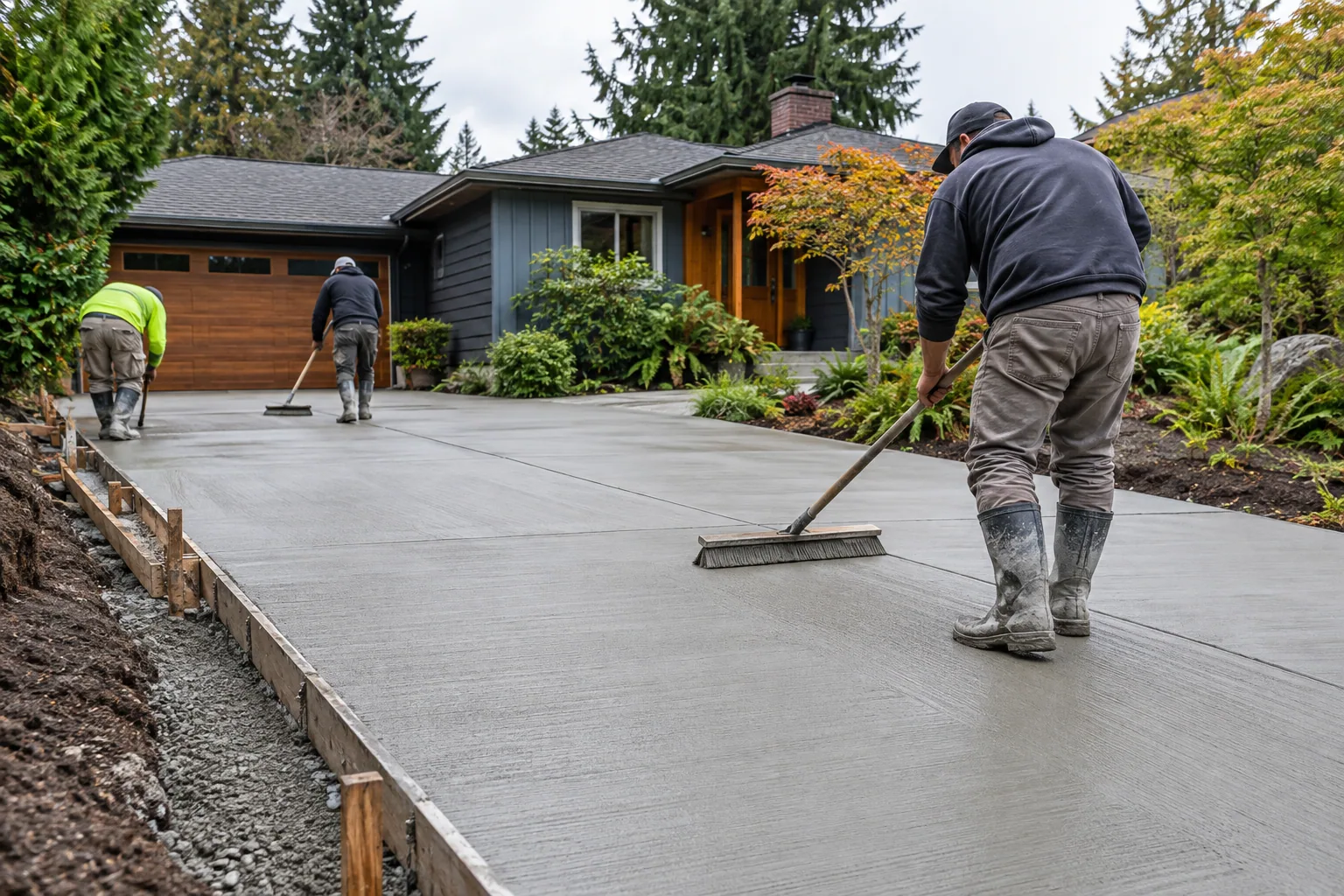
From old slab removal to a properly graded, reinforced pour with clean control joints — we handle driveway projects across Portland neighborhoods from start to final cleanup.
- Locally Owned
- Free Estimates
- Residential & Commercial
- Responsive Communication
What Does Concrete Driveway Building Actually Involve in Portland?
A concrete driveway is more than a flat surface between the street and your garage. In Portland, where rain falls for much of the year and clay-heavy soils shift with the seasons, a driveway needs to be planned around drainage, load, and ground conditions — not just poured and left alone.
Concrete driveway building in Portland typically starts with evaluating the existing surface and the ground beneath it. If the old driveway has failed, the crew removes it entirely — saw-cutting, breaking, and hauling the debris. The exposed subgrade is inspected for soft spots, root intrusion, and standing water paths before any new base material goes down.
From there, the site is excavated to the correct depth, graded to direct water toward the street or approved drainage, and layered with compacted aggregate. Forms are set to the proper elevation, reinforcement is placed where appropriate, and concrete is poured at the thickness suited to your daily vehicle use. Control joints are cut at planned intervals to manage where cracking occurs — because all concrete eventually develops cracks, and the goal is to control where they form.
How Do You Know if Your Driveway Needs Replacement Instead of Patching?
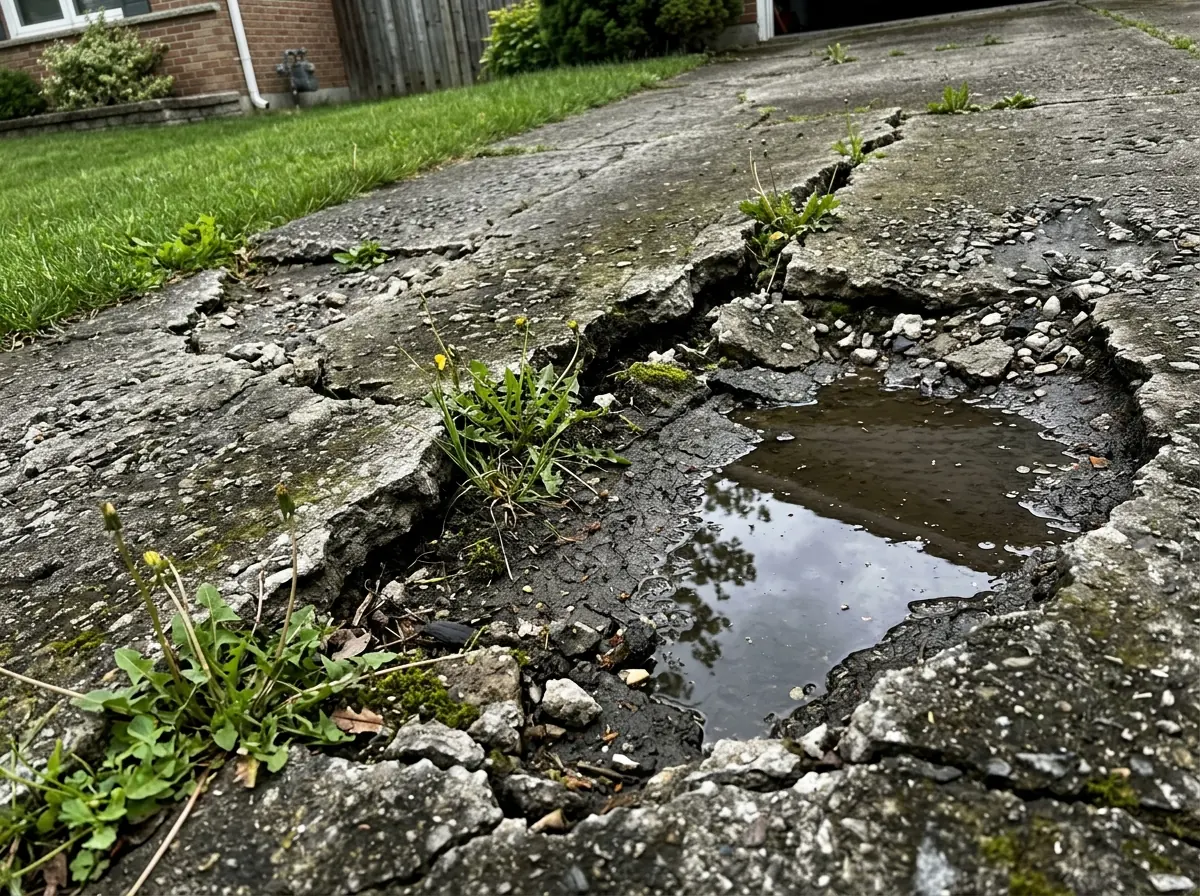
Patching a driveway can be practical when the damage is limited and the slab underneath is still stable. But when you notice more than one of these signs, a surface repair usually will not solve the real issue.
Cracks Wide Enough to Catch a Coin
Hairline cracks are normal in most concrete. Cracks wide enough to fit a quarter into suggest ongoing settlement, base failure, or root pressure that a patch will not correct. In Portland's wet climate, water enters those cracks and accelerates the deterioration each season.
Surface Flaking or Crumbling at the Edges
Spalling and edge deterioration are common on older Portland driveways, especially those that were poured too thin or finished during damp conditions. When the surface peels away in layers, the concrete mix itself may be compromised — and adding a skim coat over failing material does not hold.
Uneven Settling or a Visible Lip Between Sections
When one section of driveway sits noticeably higher or lower than its neighbor, the base material beneath has likely eroded or compacted unevenly. This creates trip hazards, vehicle scraping points, and channels where rainwater pools instead of draining toward the street.
Water Pooling on the Surface After Rain
Portland driveways take a lot of rain. If water collects in low spots rather than flowing toward the curb, the slab has likely settled or was never properly sloped during the original installation. Standing water saturates the base, encouraging further settlement and moss growth on the surface.
Concrete Driveway Building Options and Related Services
Driveway projects in Portland vary depending on the property, the terrain, and what the homeowner needs. Here are the most common scenarios we handle.
Concrete Driveway Building in Portland — Local Conditions That Matter
Portland gets over 150 days of measurable rainfall in a typical year, and that extended wet season affects every stage of a driveway project. The ground stays saturated for months at a time in neighborhoods like Sellwood-Moreland, St. Johns, and Woodstock, which means the subgrade needs careful evaluation before any base material goes down.
Clay-heavy soils across much of Multnomah County expand when wet and shrink during dry stretches. That seasonal movement can undermine a driveway that was poured on an insufficiently compacted base. Mature trees in established Portland neighborhoods also send roots under driveways, lifting sections and cracking slabs from below. Properties near large Douglas firs, oaks, or maples are especially prone to root-related displacement.
We plan every Portland driveway with these conditions in mind — drainage slopes that account for heavy rainfall, base depths that accommodate unstable soils, and reinforcement where the expected load or ground conditions call for it. The goal is a driveway that performs well through years of rain, not just the first dry summer after it is poured.
What Happens When You Call for Concrete Driveway Building in Portland?
Call or Submit a Request
Reach out by phone or through our contact form with the basic details — what your driveway looks like now, its approximate size, and your address. You do not need to have everything figured out. We respond within one business day to schedule a visit.
Free On-Site Assessment
We visit your property to measure the driveway area, inspect the existing surface, check the soil and drainage conditions, review site access for equipment and concrete delivery, and identify any factors that will affect the project scope or cost. This evaluation is free and comes with no obligation.
Permits Pulled, Timeline Confirmed
Driveway work in Portland typically requires a permit from Portland Permitting & Development, especially when the driveway approach connects to the public right-of-way. We handle the application, coordinate the required inspections, and confirm the project timeline once the permit is approved.
Demolition, Pour, and Completion
The crew removes the old driveway, prepares and compacts the base, sets forms, places reinforcement, and pours the concrete. After finishing and control-joint cutting, the surface is protected during the curing period. We clean up the site, walk you through the finished work, and coordinate the final inspection where required.
Ready to Replace Your Portland Driveway?
Whether it is cracked, settled, or just worn out — the first step is a free on-site evaluation with a clear written estimate.
Why Portland Homeowners Choose Our Team for Driveway Work
Experienced Concrete Professionals
Our crews have handled driveways across Portland — from flat suburban lots in Beaverton to steep, narrow properties in the West Hills. That range of experience shapes how we approach each project.
Based in Portland, Familiar with Every Neighborhood
We know which areas have clay soils that hold water, where tree roots cause the most driveway damage, and which permit offices handle which jurisdictions. That local knowledge prevents surprises mid-project.
Free On-Site Estimates, No Obligation
We visit your property, measure the project, inspect the existing conditions, and provide a detailed written estimate covering every component. There is no charge for the visit and no pressure to commit.
Permit Handling Included, Not an Add-On
Driveway permits in Portland can involve Portland Permitting & Development, the Bureau of Transportation, and sometimes Urban Forestry if trees are nearby. We handle the applications, coordinate inspections, and keep the timeline on track.
Frequently Asked Questions
Driveway costs depend on the project size, demolition and hauling requirements, site access, base preparation depth, concrete thickness, reinforcement, finish type, and permit fees. Portland-area pricing runs higher than many national averages due to local labor rates and disposal costs. The most reliable way to understand your cost is through a free on-site estimate specific to your property.
In most cases, yes. Driveway work in Portland — especially when it involves the driveway approach or public right-of-way — typically requires a permit from Portland Permitting & Development. The Bureau of Transportation may also be involved. We verify the current requirements for your property and handle the permit process.
Plan on keeping vehicles off the surface for at least five to seven days under normal conditions. Concrete reaches approximately 70 percent of its design strength within seven days and continues gaining strength over 28 days. Cool, damp Portland weather can extend curing times slightly, so we provide project-specific guidance after the pour.
All concrete develops some cracking over time — no installation method eliminates it entirely. Portland's moisture and occasional freezes can contribute, but proper base preparation, appropriate thickness, reinforcement where needed, and well-placed control joints significantly reduce the risk of uncontrolled cracking. The objective is to direct any movement into the planned joints rather than across the visible surface.
A stable compacted aggregate base, correct concrete thickness for the expected load, reinforcement where appropriate, properly spaced control joints, adequate curing protection, and good drainage all work together to minimize cracking. Avoiding overloading the driveway with vehicles heavier than it was designed for also helps extend its service life.
If the damage is limited to one or two cracks and the slab is still level and stable, patching or crack sealing may extend its useful life. When you see widespread cracking, significant settling, repeated patch failures, or ongoing drainage problems, replacement is usually the more practical long-term choice. An on-site evaluation is the most reliable way to determine which approach makes sense for your situation.
Other Concrete Services We Provide in Portland
Start Your Driveway Project Today
Call or submit a request to schedule your free on-site evaluation. We will assess the existing conditions, discuss your options, and provide a detailed written estimate — no obligation.