
Garage Floor Concrete in Portland OR — Solid Slabs for Real Use
Whether your garage floor is cracked, settling, or you are building new — we pour garage slabs designed for the weight and wear that Portland homeowners put them through.
- Locally Owned
- Free Estimates
- Residential & Commercial
- Responsive Communication
What Goes Into Building a Garage Floor in Portland?
A garage floor handles more than cars. In Portland, garages serve as workshops, storage areas, home gyms, and laundry rooms. The slab underneath needs to support those loads while also managing moisture — something Portland's wet climate makes more complicated than it sounds.
Garage floor construction begins with excavation and base preparation. The subgrade is compacted, a layer of gravel base is added and compacted again, and a vapor barrier is placed over the base to reduce moisture migration from the ground into the slab. In Portland, where the water table can sit close to the surface during the wet months, this moisture barrier is especially important.
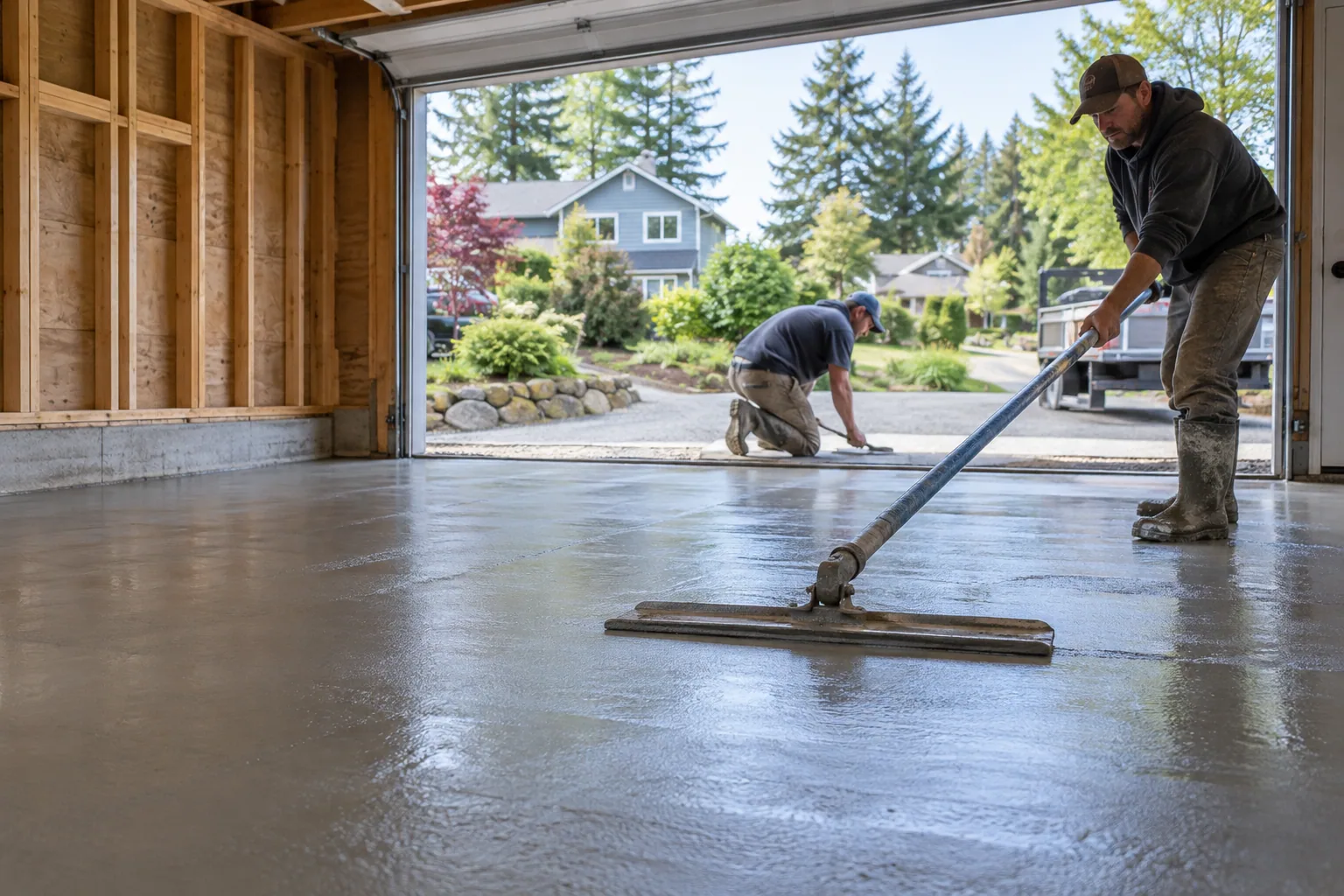
Forms are set around the perimeter — typically flush with the foundation walls or stem walls of the garage structure. The concrete is poured at the thickness appropriate for the intended use, finished to a smooth or light-broom texture, and jointed with control cuts to manage cracking. The floor then needs adequate time to cure before vehicles or heavy equipment are placed on it.
Signs Your Garage Floor Needs Attention
Garage floors take a beating over the years. Here are the conditions that typically indicate the floor needs more than a quick fix.
Persistent Moisture or Damp Spots
If your garage floor stays damp or shows dark wet spots even when it has not rained recently, moisture may be wicking up through a slab that lacks a proper vapor barrier. This is common in older Portland homes where the original garage floor was poured directly on soil without modern moisture protection.
Large Cracks or Settling Sections
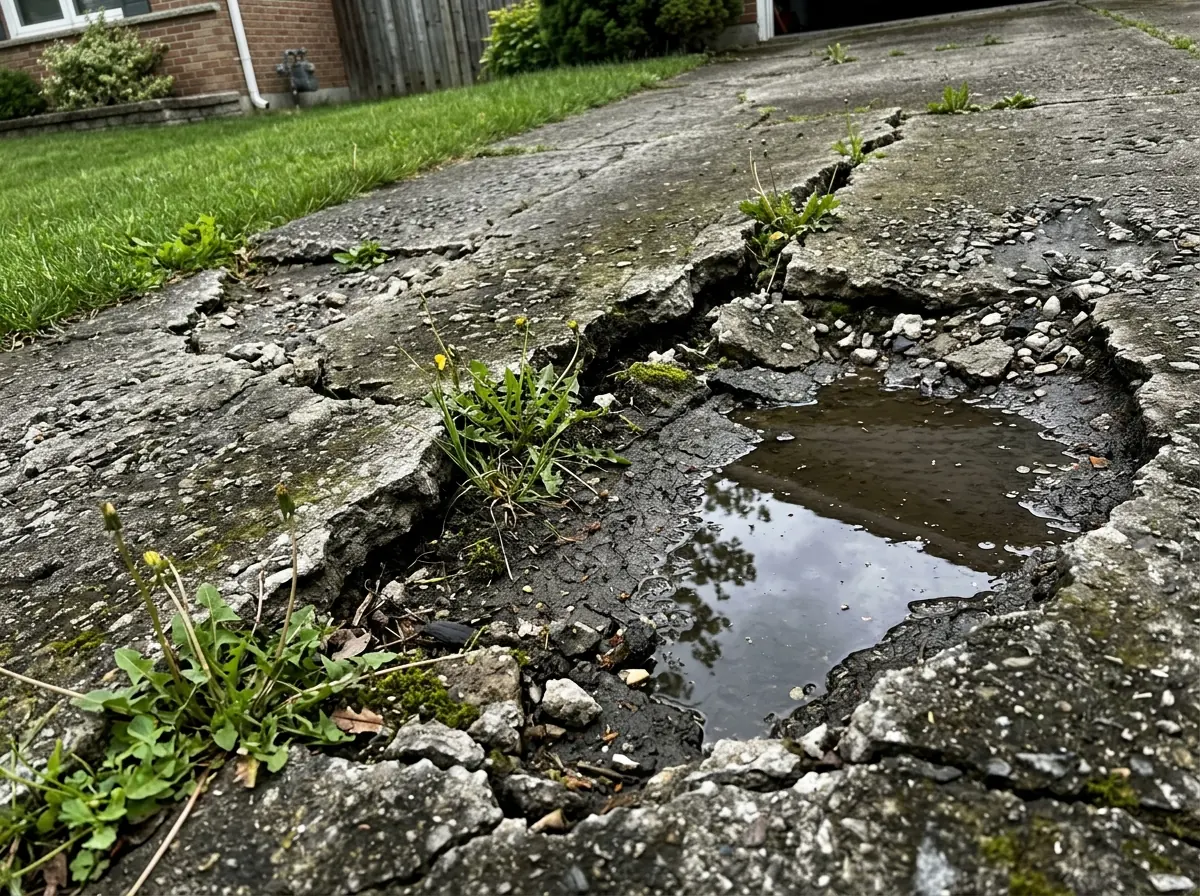
A crack you can fit your finger into or a section of floor that has visibly dropped below the surrounding level suggests base failure. In Portland, this often happens when the soil beneath the slab erodes or compacts unevenly from groundwater movement.
Surface Dusting or Powdery Finish
When the garage floor produces a fine gray powder underfoot — especially noticeable when sweeping — the surface layer has likely weakened from poor finishing during the original pour, inadequate curing, or long-term moisture exposure. Coatings applied over a dusting surface typically peel within a season.
Floor Is Too Thin for Current Use
Older Portland garages were sometimes poured with thinner slabs intended only for light vehicle storage. If you are using the space for a workshop with heavy equipment, or if a vehicle heavier than a standard sedan parks there daily, the existing slab may not be adequate for the load.
Garage Floor Services We Provide in Portland
Garage Floor Concrete in Portland — Moisture Is the Main Concern
Portland's high water table and extended wet season create a specific challenge for garage floors. Without a vapor barrier, moisture migrates through the slab by capillary action. Over time, this causes efflorescence — white mineral deposits on the surface — peeling coatings, musty odors, and conditions that promote mold growth in stored items.
Many older garages in Portland — particularly in neighborhoods like Kenton, Parkrose, and Woodstock — were built without modern vapor barriers. Replacing these floors with a properly detailed slab that includes a poly vapor barrier over compacted gravel is often the most effective long-term solution.
We evaluate moisture conditions during the on-site assessment. If groundwater is a factor, we discuss options for managing it — including drain tile, sump provisions, or elevated slab details that create an air gap between the soil and the finished floor.
What Happens When You Call for Garage Floor Work in Portland?
Contact Us with the Basics
Let us know the garage size, what the floor looks like now, and how you use the space. Attach photos if you have them — they help us prepare for the site visit.
Free Site Assessment
We inspect the existing floor, check for moisture issues, measure the space, and review access for equipment and concrete delivery. The assessment is free and comes with a detailed written estimate.
Schedule and Prep
Once you approve the estimate, we confirm the timeline. You will need to clear the garage before work begins — we can advise on timing and logistics if the space is heavily used.
Demo, Pour, and Finish
The crew removes the old floor if needed, prepares the base, installs the vapor barrier, pours and finishes the new slab, and cuts control joints. After curing, the garage is ready for use.
Need a New Garage Floor in Portland?
Start with a free on-site evaluation. We inspect the existing floor, assess moisture conditions, and give you a clear written estimate.
Why Portland Homeowners Trust Our Team for Garage Floors
Moisture Management Built In
Every garage floor we pour includes a vapor barrier as standard — not as an optional upgrade. We address the moisture issue at the base level because Portland's conditions demand it.
Sized for Your Actual Use
We do not pour a standard four-inch slab for every garage. If you are running a home workshop, parking a heavy truck, or installing floor-mounted equipment, the slab thickness and reinforcement reflect that use.
Clear Written Estimates
The estimate covers demolition, base prep, vapor barrier, concrete, finishing, and cleanup. No hidden line items added after the project starts.
Logistics Handled for Tight Spaces
Portland garages are often tight and accessed from narrow alleys or driveways. We plan concrete delivery, equipment access, and pour sequencing around these constraints before the work day.
Frequently Asked Questions
Standard residential garage floors are typically four inches thick. If the space will support heavier vehicles, workshop equipment, or additional load, a thicker slab — sometimes five or six inches — may be appropriate. We determine the right specification during the site assessment.
In Portland, yes. The high water table and extended wet season mean moisture can migrate through the slab if no barrier is present. A polyethylene vapor barrier over compacted gravel is standard practice for every garage floor we pour in the Portland metro area.
Plan on keeping vehicles off the new slab for at least seven days. Light foot traffic is usually safe after 48 hours. Full design strength develops over 28 days. We provide specific guidance based on the mix used and the weather conditions during the pour.
Yes, but the concrete needs to cure fully before any coating is applied — typically 28 days or longer. The surface must also be properly prepared for adhesion. We can advise on timing and surface preparation requirements if you plan to coat the floor after the pour.
Related Services
Get Your Garage Floor Project Started
Call or submit a request to schedule a free assessment. We will inspect the existing floor, check for moisture issues, and provide a detailed written estimate.